
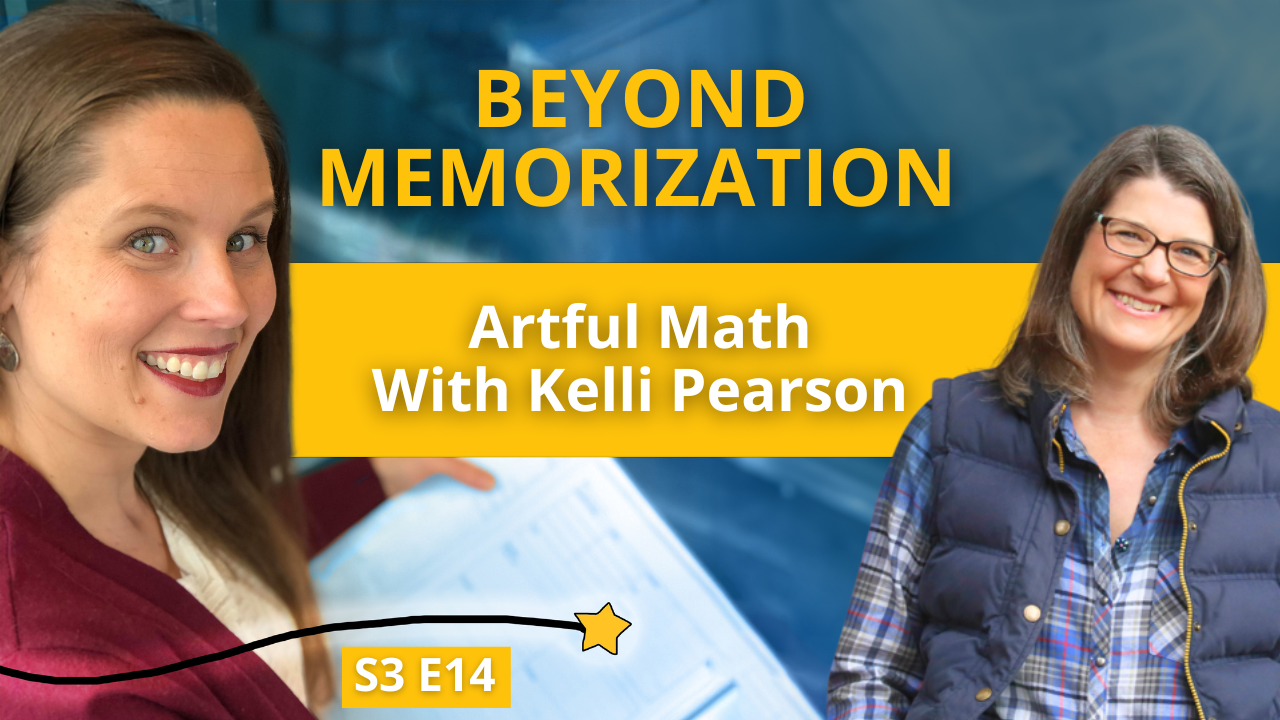


In this episode of Diary of a Dreamer, Tasha Eizinger sits down with Kelli Pearson, founder of Artful Math and author of the best-selling Kitten Math series, to challenge one of the most damaging beliefs many of us carry: “I’m just not a math person.”
This conversation goes far beyond math.
Kelli shares how learning becomes transformational when we replace memorization and pressure with meaning, curiosity, and play. Drawing from over 25 years of teaching experience, she explains why fear-based learning shuts down confidence and how understanding concepts visually and emotionally can change everything, for both children and adults.
Whether you’re a parent, educator, entrepreneur, or someone who has quietly carried math anxiety into adulthood, this episode offers a powerful reframe: learning isn’t about speed or perfection. It’s about understanding.
Connect with Kelli: https://artfulmath.com
Shop: https://shop.artfulmath.com
Find Your Child’s Math Superpower Quiz:
https://artfulmath.com/quiz
Special Listener Offer
20% off your order at shop.artfulmath.com
Use code: DREAMER
Books Referenced in This Episode
- Kitten Math by Kelli Pearson
- Kitten Math 2 by Kelli Pearson
Read Transcript
00:00 Welcome to Diary of a Dreamer, where resilience unlocks your potential. I’m Tasha Eizinger, and each week I’ll bring you powerful stories and practical insights from my own experiences and inspiring guests. Whether you’re facing challenges or chasing dreams, this podcast is your go-to for motivation, building confidence, and practical tips for transforming obstacles into opportunities. Be sure to check out my website, TashaEizinger.com.
00:28 Let’s dive into today’s episode and start turning your dreams into reality. Today we are with Kelli Pearson. She is the founder of Artful Math, which when I heard that phrase, I was automatically curious about what is Artful Math. So we’re going to learn about that today. And Kelli has earned over 200, let me make sure I have this right, 200 five-star reviews on Amazon, which is tremendous to be able to do that for her best-selling book, Kitten Math.
01:04 which also makes me very curious to learn more. So Kelli, I know that you like to help people who are not mathy, right? Or maybe don’t think that they’re good at math and help those people. So I’m really excited to hear more about what you do and how you do it and why, because I think that we all learn differently and you have a unique approach. So thanks for being here today. Sure.
01:34 i’m excited thank you yeah so let’s go ahead and first talk about like what do you mean by like the non-mathy people okay um so i didn’t grow up as a kid who was naturally drawn to math and i think that there
01:54 are a lot of people who don’t like math for the sake of it they’re not like into numbers they’re more like they like stories they love pictures they’re super creative and numbers don’t really have a lot of meaning for them um in my experience math was just it was rules and um uh it was rules and facts that you had to learn and memorize and
02:24 every year was more things to to learn and memorize they just like piled on top of each other and they weren’t linked to anything i mean up until i was in my 20s if you’d asked me the difference between addition and multiplication i would have said multiplication has the x i didn’t really understand that they had that they were used for different things that one was adding you know groups similar groups i think it’s so interesting too because you’re right that
02:52 Maybe they see numbers in a different way. For those non-mathy kids, they’re not going to connect with the traditional way of doing math. So where’s that gap? Like, what do they need? So these kids who are creative and visual, they just need to start with a context for math. So they need to see in a real world context.
03:18 What is the problem they need to solve? Or they need to see something written, draw a picture of something. And often we need to start with like meaningful language. So instead of saying what’s two times six, then we can say instead of the times, we’ll say groups of. So what are two groups of six? Can you draw a picture of that? And they can draw a picture of.
03:46 two circles with six dots inside and they can see what that means and apply that to, you know, two groups of six in their snack or whatever. So they just need to start with some sort of a real world, which is why when I created Kitten Math…
04:10 um i did that on the first in the first place because i was working at the time as the teacher of a private in a private school and one of the kids this brilliant little fourth grade girl named eliza she um she did not understand math she was like that was the one thing she could not do and i learned that she fostered kittens and i thought man if i could teach eliza math with kittens
04:35 She would get it in a heartbeat. And that’s what planted the idea of kitten math. And I started coming up with all kinds of kitten-related math stuff. And sure enough, she got it. We would start with her kittens and then make math around that. And eventually that grew into me doing math circles with kids. And I started fostering kittens myself because I wanted to learn more to write this book. And so I would bring the foster kittens to these kids.
05:04 at the math circles, and they would measure the kittens and answer questions about averages with the kittens. And so with those kids’ help, I wrote this book and changed it. And over the years, it became Kitten Math. And now Kitten Math 2 is out as well. I love, love, love this for so many reasons. First of all, we learn when we’re motivated and interested. Right.
05:30 If you had made it Lego math for Eliza, she’s going to be like, Lego math? I like kittens, right? And who doesn’t love kittens? I mean, they’re so adorable. But also taking something that’s so abstract, like two times six, it’s so out there of like, what does that even mean? Sure, like a math person’s going to see it in their head probably, but to break it down in a way and do that with all math.
05:58 So they can actually see it and then make it practical on top of it. Like that’s a little bit genius, Kelli, like to combine all of that. And I know you have over 20 years of teaching experience, like over 25, right? Years of teaching experience. All kinds of teaching. Yeah. Yeah. So yeah, this sounds like somebody who’s experienced a lot of teaching with children to be able to do that level of complexity, but make it on the surface just look like.
06:27 it’s cute kittens right very clever i call that sneaky school well and what i found too which i thought was so interesting is when i was work when i did start working with kids in this what has become my artful math method now but at the beginning was just me trying stuff out like trying out with pictures with objects with meaningful language with all these different things
06:54 What I found was that those kids who started out saying I’m bad at math ended up being the ones who had the, when they approached it through pictures and they approached it meaningfully, they were the ones who were the deepest thinkers of math later on. So you could ask them questions like, why, like, how did you solve that problem? Or why did you do it that way? And they would like walk you through this really interesting reasoning.
07:22 of deep thinking about math. Whereas another child who may be memorizing the timetables was really easy for them. You would ask them why? And it would just be like, well, because I remembered that that’s what it was, but they didn’t necessarily have a deep understanding of what they were doing. And so it was just fascinating to me that these kids who were the bad at math ended up being the ones when they were taught the way their mind wanted to learn it, they were the ones who
07:51 who ended up like really thinking mathematically the way mathematicians really do think about math well and this is so great too because you and i grew up in a time period where like this is the formula for the math and i remember even like some of the kids in my class who were very intelligent maybe they would skip steps or they would figure out a different way to do the problem and they would get the correct answer and they could consistently get the correct answer and the teacher would mark them wrong and say
08:19 That’s not the way we’re doing it. And I don’t think that any of us learn exactly the same way with the exact same thing. So to provide another way for children to learn math, I think this can benefit even the math kids. Oh, definitely. They really understand it. Yeah.
08:41 And also, do they enjoy it? Because, you know, you get a kid who’s good at math and then very quickly they’re at the top of the class for math. And so they’re expecting themselves to always be the ones who get the right answer. They’re the first ones to get the right answer. And they have to like get the best scores. It becomes a very competitive math is like the culture of math is very competitive. And so when you have a kid who is naturally like kind of gifted in math.
09:08 then it’s very stressful for them. And a lot of those so-called gifted kids, they end up some of the most anxious kids because even if nobody else is pressuring them, even if there’s no overt competition happening, they pick up this vibe of being good at math means you answer really fast and you don’t make mistakes. And if you do make mistakes, then…
09:33 does that mean that I’m bad at math? And it’s like, that’s very precarious, this whole good at math thing. And if they’ve never struggled with math as a kid, and then they hit like middle school, or pre algebra or something, and then suddenly it feels different or hard. Now, it’s like their whole identity of being good at math was of having it come easy to them. And then now it doesn’t. And so
09:57 Artful math approaches things not as competition, but as more of like a collaboration and really just play. So kids who have been really stressed and anxious and are afraid to make a mistake. I’ve had one child, the most anxious child I ever had. She would look at math and burst into tears. And we finally just started playing some games together. And she was doing the exact same math that I had asked her.
10:26 at the beginning of our session um and but she was doing the exact same thing and was doing it just fine and i actually asked her like what’s different about this we’re doing the same thing as before and you look like you’re having fun and um and you’re not scared of this what’s different and she said well um in games mistakes don’t count
10:48 That was so telling to me because it’s true. For kids, there’s rules. The rule of math is you don’t make mistakes. You don’t disappoint your teacher or mom. You have to answer fast. You don’t think about it. You don’t have to think about it. Whereas games are like, you just do stuff and then…
11:09 you make you know if you get it wrong you try again the next time and it’s just play it doesn’t matter it doesn’t count and so um yeah so everything that i do is playful in its base it feels it it’s it’s you know the word rigor is used in many ways of being like rigor means it like rigor has to look like this and you study and blah blah blah i think rigor is deeply challenging yourself in math and my stuff does have rigor
11:37 But it is couched in contexts that are fun and interesting for kids, like Kitten Math or, you know, like the games that they’re playing. Well, and it makes sense, too. If we’re having fun, we’re going to retain it so much better, too, and really be immersed in the experience. I mean, I think all the adults listening can think about, you know, meetings and stuff where somebody’s just rambling forever. You tune it out. You’re not.
12:05 retaining anything it’s boring it’s dull you dread it right but we do this to kids so often not always there are amazing teachers out there but there’s a lot where it’s like math is not something where it’s like shiny and fun a lot of times and so for you to to be very aware of that I think is really important and I’m kind of wondering the way that you teach it
12:30 does it help with mental math too because you’re teaching them how to break it apart and like conceptualize it and make it practical does it help with that yeah it absolutely does so the thing about mental math is um you know i i’ve bought books that say that say you know to do this kind of problem here are the steps that you can do in your head to do math mentally and it but it’s all
12:56 It’s all words and numbers. And again, more things to remember. Like math is only stuff to remember. And so you’re going to do mental math by like remembering another rule. Whereas I have a book called multiplication facts. It’s a little like a bundle on my store. And each of the multiplication facts is shown in like a rectangle or an array of like.
13:24 you know four by three or whatever so so kids learn to like visualize multiplication a kind of a rectangle right and so if they know like their twos if they know two times five or two times six they can like visualize that in a rectangle um and then if they do if they know two times five but they don’t know two times six then they can do two times five and then one more um but but
13:50 it’s all set up so that they kind of, they see it in their mind, right? In the first place. And so if they can visualize it, then that leads naturally to mental math. So if they can think about it in meaningful ways, like in equal groups, or if they’re thinking about it in this visual way, then very naturally kids start like taking this picture and this picture and putting them together. They don’t have to learn.
14:19 that skill and so I just I find that when I when I’m teaching a kid and over time they just get used to to go to thinking meaningfully and visually about something and then and then they’ll hit a hard problem and solve it easily and I’ll be like
14:42 You answered that really quickly. How did you get that answer? And they’ll come back with something that’s like one of those mental math skills that people teach, but they came up with it on their own because math makes sense to them. See, that’s the thing about the difference between teaching with only rote learning is you’re putting the whole learning experience onto the teacher or the textbook. And the whole idea is…
15:09 We teach them how to think about it and what to remember. And then they remember the right things and then they spit it back out. But if there’s no thought going on in the mind of the kid, then there’s no room for them to develop these strategies. But when we start out by like every time I get an answer from one of my kids, I ask, are you sure? Or can you prove it?
15:36 like right or wrong I don’t just ask it when they’re wrong I ask it right or wrong like are you sure about that can you prove it how do you know how is that always true and so they get used to like they come up with an answer and then they think about it and they like go well does that make sense and then they’ll tell me yes I think yes this is always true because blah blah blah blah blah and so they’re all really yeah I need to interrupt for a second that is so huge what you just said
16:06 We often, when kids get a problem wrong, that’s when we ask, what did you do wrong? And why is it wrong? And let’s dissect it. And I’m sure they hear a question in math and they start rippling up with anxiety and feeling the anxiety. Whereas you’re teaching them, it is okay to be asked, are you sure? And can you prove it? There’s nothing wrong with those questions.
16:31 but when we are constantly asked because we’ve made a mistake or did something wrong then that carries us through even into adulthood where we have somebody say are you sure we’re going to get defensive or feel anxious or worried you are teaching them such an important skill that carries out into other areas of life i’m sorry to interrupt but that was too huge not to interrupt you that is so genius
16:58 I love that. Okay, you were on a roll, and I’m very sorry, but… No, it’s okay. Yeah, so keep going. Well, so we were talking about mental math and all of that, but really what I find with math is that, you know, we think of math as being such a, what’s the word? It’s all like in your head. It’s very logical, and it’s not…
17:24 people think of math as not emotional but i find that math is one of the most emotional learning topics out there um it’s just very heavy the the lessons or the experiences we take away from math we apply to pretty much everything so if if we think that we’re bad at math if a child or an adult if we think that we’re bad at math all of a sudden
17:49 that applies to all these other things that we might be bad at or we might where we think that we can’t do um it’s it’s it’s just very i find it’s very formative and sometimes math has been very traumatic for a lot of us sometimes a lot of adults will tell me there’s one thing that one teacher said one time when she was in fourth grade this teacher said honey math is not your thing
18:15 um you know focus on reading or something and that one that one experience will form them all the years forward and that is why today they think that they’re bad at math and so um there was a time many years ago when i was just feeling i was in the middle of of this you know like going from being a bad at math person to not being a bad at math person and and learning about
18:42 all of that and i thought i i want to bring together a group of women because it seems like very often it’s women who are in this mindset um i want i want to bring the women who don’t like math and who believe that they’re bad at math and i want to have something at my house where i
19:02 give them a different experience of math. It’ll be 90 minutes long. We’ll just see if anybody shows up. I posted something on Facebook. I said, you can’t come if you like math and you can’t come if you think you’re good at math and you can’t come if you’re a man. This particular one was like only for women because I didn’t want them to be, you know. Anyway, so I invited and 50 people signed up. So I had to do.
19:25 i had i had 25 come to my living room one day and then the next weekend i had to do it again with another 25 and um and these so we just like we i showed them uh fibonacci like cool patterns in nature and they drew a spiral a fibonacci spiral
19:46 um we they played games and I did this hands-on thing with linear equations with like this balance scale and little ponds and so like within 10 minutes these women who had never understood algebra were doing linear equations and at the end I had we had so much fun together and at the end I we I did I had everybody you know write a little like what is it like review or not not review um
20:14 feedback form you know just to see and to a woman every single one said that they had so much fun and um this was the first time they’d ever known that math could be fun and so um yeah so i just have a real special thing in my heart for um for
20:35 people for adults who have like grown up thinking that they’re bad at math and so a big reason why i do artful math is so there aren’t kids who need to there are i don’t want kids to ever be be left out because math filters them out somewhere through the process um artful math like catches those kids who think differently who would not who would normally be be saying oh i’m not a math person
20:59 go do different things. It pulls them in and says, you are a math person. You just need to learn it differently. So are you going to do a program for adults? I am. I had been thinking that I would just stick to kids because that was such a big need. But I have recently decided that I’m going to create a Joy of Math course at some point for adults that will later be followed probably by a math.
21:28 course for adults in the artful math style that um just teaches them math much more quickly because adults learn things so much so much faster right well we we have like that background yeah kind of help um yeah i’m already thinking of people that i would tell them about that uh it’s you know when i was teaching which i only taught for you know four years in the classroom but when i was teaching i would have parents who’d say like
21:56 I can’t do their fourth grade math. And I feel for families, you know, that, that don’t have a math person in the home for these kids, you know? And so one of the things I think is interesting, maybe you can explain this to me. I feel like, you know, I focus mostly on English and literature. That’s predominantly what I taught. And I only did math one year, thankfully, because math is really hard to teach.
22:24 It’s really hard to teach. I think the way that you do it, it would be easier to teach because it makes a lot of sense. But kids, for whatever reason, feel like in math, it has to be worded exactly like their teacher or it’s wrong. Is that because of their anxiety or like what’s your theory on that? Well, it comes back to the way we generally teach math. We say.
22:50 This is this is what you need to do. These are the steps you need to take. And we’ve seen like there’s plenty of teachers who will mark you wrong if you don’t do it the way they have taught you to do. And that was true for, you know, the traditional math that we got when we were you and I got when we were kids and also even Common Core, which that’s a whole nother topic. But but but teachers who are trying to figure out how to teach Common Core say.
23:18 you know sometimes they’ll they’ll now say here’s this new way of teaching math and you have to do it exactly like that like the problem is in t in teach and anybody teaching math that these are the steps this is how you have to do it so um what i what i would tell parents is as much as possible like teach kids how to think about the math um and i have a list of you know very simple
23:47 tweaks you can make for it’s you know instead of multiplication say of or groups of instead of division say in how many groups um you know and and there’s just there’s just certain small small changes we can make to how we how we frame a math problem that lets kids be able to solve it
24:08 However, they can solve it. And if you do have a teacher that’s like, you have to do it as a raise or you have to do it in this way, then what I would tell the parent is go on YouTube, like put in those exact words, show them that exact thing if they need to. But when you’re talking about math outside of that, it’s, you know, what you don’t want to do is say, I think where parents get stuck is if they think I’m.
24:37 I only know this way to do math. And I only know how to teach the steps to this way to do math. And their teacher is teaching different steps. It’s not about the steps, right? And so if all you know how to do is teach those steps, then yeah, don’t do that. Or, you know, you can if your kid says that’s okay. But if they’re like resistant, don’t worry about that. Instead, talk to them about what the concept is. So if they’re multiplying,
25:06 that’s like that’s making equal groups of things and counting them up like helping them actually understand um does there come a point in math though where you really do just have to memorize the formula is there like calculus i feel like i mean i’m not going to go there because i’m i’m elementary and so okay so all the elementary things kind of change
25:32 But yeah, I hear what you’re saying. It’s like, OK, so if the fastest way is to do is to multiply with this algorithm, is there a point that you teach that algorithm? And I would say definitely. So, for example, I say when kids are learning a new concept, I use this other these other words. Right. We don’t stay with that forever. That’s just as you introduce them, they learn those words. They can make some sense out of it. And then you say, and we call this times or we call this multiply. And they make that connection. There is a point of time when the way the way I teach, when I teach meaningfully, it takes more time for kids to solve certain things. If you say solve this anyway.
26:19 you want like here’s this problem solve it any way any way you like it will take longer it will take it will take time for them to kind of work work through that but after a while once they like once they once they have the um conception of like what this kind of problem is then you can say i can show you a shortcut to do that a little bit faster let me know if you want that
26:46 And at the beginning, they might be like, no, I don’t want that because they’re like figuring something out. But at some point, they’ll see it takes them a while to do that every time. And they’ll be like, yeah, show me the shortcut. The shortcut is that thing that mom or dad has been like, do it in this steps. That’s called the algorithm. And there’s a time for that. And once their kid has like a basis, then you teach them that shortcut. And they’re like, you know.
27:14 they know exactly what that is. They’re not memorizing something. And if they forget your shortcut, they still know how to do it. If they forget the multiplication facts, they can still figure out eight times 12 because they have this understanding of what multiplication is in the first place. I’m so glad you clarified that. I figured that’s where you would go with it.
27:35 But I didn’t want somebody listening, thinking this is something that you’re going to do all through college of, you know, like it’s creating that foundation. So they understand, they need to understand addition, subtraction, multiplication, division, some decimals, fractions, like there’s things that they need to understand that foundation. So when they get into those, you know, higher level maths.
28:00 they have the general understanding of what they’re doing. Like, that’s what I’m hearing from you. Is that accurate? There’s also a danger if you’re just teaching rote learning, if you’re just teaching memorization, there are these rules that they get when they’re in kindergarten or first grade. Those rules will change in fourth grade or fifth grade, and it doesn’t make any sense to kids. So, okay, here’s one example. Kids learn how to divide.
28:29 and then they learn that sometimes there’s remainders and with the remainder they write r1 for a remainder of one well then the next year in fifth grade they learn and sometimes you say the remainder is a fraction and then later on they learn and now sometimes the remainder is a decimal and each time they do that slightly differently and they’re like wait a minute i memorized what you told me to learn
28:51 last year about the R and now you’re telling me no more R but I do this fraction or I do this like it doesn’t make sense because they don’t have the foundation of like give them a context and then talk about like when there’s leftovers what do you do with those leftovers if it’s cookies are you just going to throw out the extra cookies are you going to split them up and share them well okay if we’re sharing them then that has to be like
29:18 a fraction you know then you can give two and a half cookies to everybody um when when things are grounded in real life then all of a sudden kids you don’t have to even teach this stuff to kids they figure it out themselves if you ask a kindergartner to share two cookies with with four kids
29:39 They will use fractions in their reasoning, even if they’ve never heard the word fraction or they don’t know how to write the word one half. They can rationalize reason through that themselves. So does your curriculum, does it go like K through five? Like what age levels? Because like I’m loving what you’re saying. You’re right. Like I think my four year old, she would figure out the cookie thing. She would know. I mean, because.
30:08 things being fair and equal when you’re very important right and so but she doesn’t know that’s what she’s doing so i love that so like do you address like the younger kids too or where what ages do you hit on so um artful math is for k through five I don’t have so many things for the younger grades right now. Most of what I have is from about second grade through fifth grade. But I’m developing new stuff all the time. And one thing that I do have for the younger kids is I so kitten math is big. Right. And but then now I have kitten math, kitten math, too. But even after that, they’re like, well, what do I do next? And so I created Kitten Math Club where they get kids get kitten related.
30:55 or yeah kitten themed math activities every month and my cat Sammy who’s this fluffy orange cat he writes the kids letters every month and he sends them a secret message in code but the code is missing some some symbols because Sammy sat on it or whatever and smeared some of them and so each of the activities has a clue at the bottom that
31:23 helps them fill in the code and then they get this funny message from sammy right so when i created this club i actually created a k through two version and a three through a grade three through five version so that was uh the first major thing that i have for you know the younger kids but um there will eventually be many more things for all the grades from k through five
31:47 That is the sweetest thing. I love it. And here again, you’re making it fun and interactive, bringing math to life, which is quite a feat. And I think the big clue is that they get done with kitten math one and two, and they’re saying they want more. Right. That’s the clue for everybody listening. If people are wanting more, that means it’s quality programming. So how can people get in touch with you?
32:13 Learn more about what you’re doing. Because I think I want to do kitten math in my home, at least during the summer. Like what a great summer project for my kids. So I know I will be wanting more information, but I can access you. So how can everybody else access what you’re doing? So I do have a store. It’s called shop.artfulmath.com. But what I would.
32:40 recommend that people do as kind of a first step is I have this quiz called find your child’s math superpower really I find that kids learn in one of three ways they tend to learn math in one of three ways they’re either a creative visual artsy kind of kid who loves stories and imagination
33:04 Or you get kids who are just like very active, playful, a lot of movement. And they do fine solving problems as long as it’s like it’s fun. It has to be fun. But then you have some kids who are just like kind of the traditional math is just fine for them. They enjoy thinking about numbers and they’re kind of logical. So each of those superpowers, the meaning maker.
33:33 the playful problem solver and the analytical achiever it helps if you kind of know where your child fits and then you can get them the kinds of resources that they need and so that the resources that they have in my store you would be able to like go okay this would be great for the mighty meaning maker this these games would be great for my problem solver so they can take that quiz at artfulmath.com slash quiz and
34:02 um and just and and they get a page of that talks about their child and you know common common uh struggles and also the things that they’re really good at and some suggestions moving forward but their child also gets a packet um of their own superpower that has some activities around their superpowers so that the child because a lot of these kids if they if they’re not learning it the way their teacher is teaching it
34:30 they’re not thinking that’s a bad teacher. They’re thinking I’m bad at math. And it doesn’t take much for a kid to think I’m bad at math. And so when you can reframe that and be like, okay, so I’ve just found out that you are a mighty meaning maker. And the reason you’re not learning math is because it’s being taught like with no pictures or, you know, no stories. So let’s find you math.
34:55 like kitten math with, would you like to learn math with kittens? You know, how about these stories or whatever? And they can like start to see themselves in a different light as well. Oh my goodness, Kelli, this is so good. I love what you’re doing and that you are treating children like the individuals that they are and providing resources so that they can succeed. And I know that that’s what every parent wants.
35:24 We want our kids to be happy, healthy kids who feel good to be who they are. And that’s what you’re providing. It’s more than math what you’re providing. I love it. I know that you had a code for the listeners as well that they can use so that they can get a discount on your product. So could you please share that with everybody as well?
35:49 So anybody listening today can get 20% off when they type in the code dreamer at shop.artfulmath.com. I hope everybody takes advantage of that opportunity because you’re doing amazing things. And, you know, I also think the adults, when they, their kids are doing the math, like they can learn math with their kids too. Yes. And it’s also very empowering.
36:15 for the the parent the adult who’s always just thought i can’t help my kid with math can’t do math with my kid when they can sit down and play a game together and they’re like actually feeling more connected instead of math pulling them apart um or being a source of conflict they they’re they’re also they’re learning and they’re also connecting with their child oh my goodness so good Kelli thank you so much for sharing
36:40 what you do. I wish we lived closer. You’re too far away from me. Because I know I’d love to get together with you and have coffee or something. You’re such an interesting person and making such a big impact on helping people. So thank you for being here today and sharing what you do. Thank you. This has been really fun.
37:06 Thank you for tuning into this episode of Diary of a Dreamer. I hope you found the stories and tips shared today to be a source of motivation and strength. Remember, every challenge you face is a chance to grow and move closer to your dreams. Don’t forget to subscribe, leave a review, and share this podcast with anyone who could use a boost of encouragement. Please check out my website, TashaEizinger.com.