
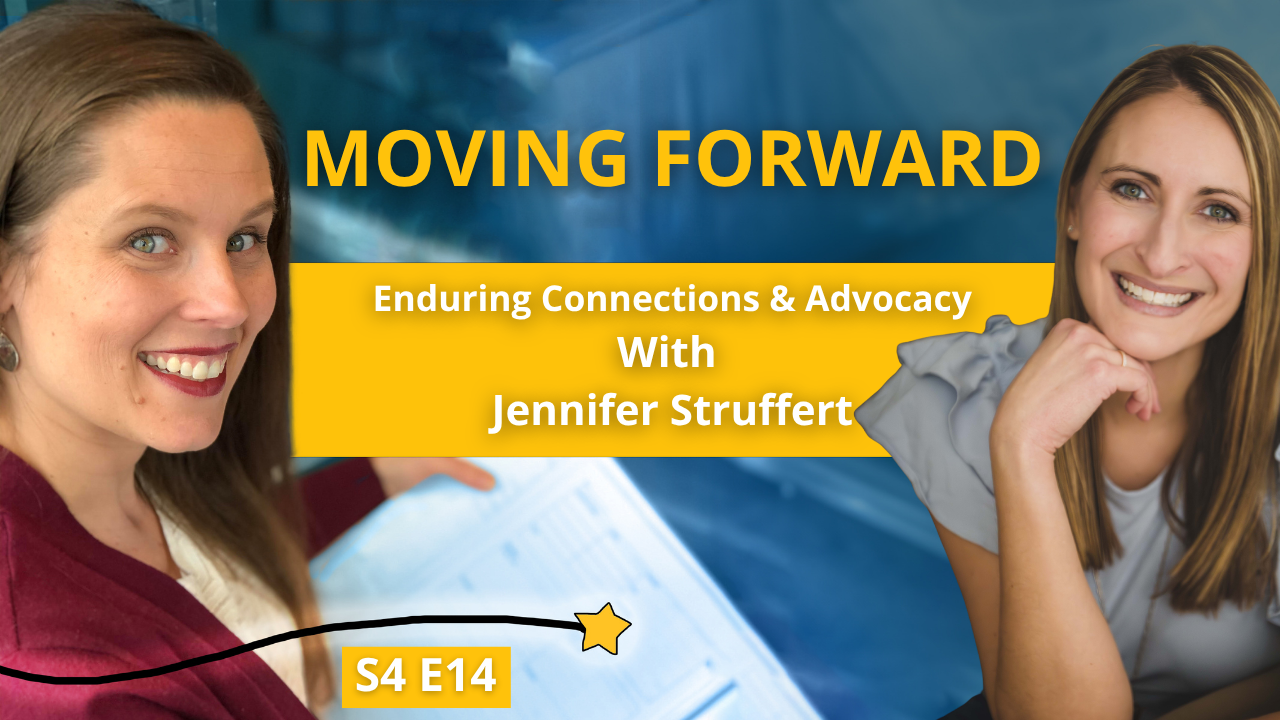


What happens when the career you thought you would retire from suddenly disappears?
For Jennifer Struffert, losing a 20-year corporate career became the beginning of something much more meaningful. Today, she is the founder of Enduring Connections and Advocacy, where she helps people navigate divorce, co-parenting, conflict, and difficult family transitions through mediation, coaching, and parenting coordination.
In this episode of Diary of a Dreamer, Jennifer and I talk honestly about what it looks like to leave a path that no longer fits, rebuild your life, and turn difficult experiences into work that helps other people.
We talk about divorce mediation, co-parenting, divorce coaching, parenting coordination, healthy relationships, trauma healing, nervous system regulation, and finding the right support system during difficult seasons.
Jennifer also shares why she believes people don’t have to navigate divorce and co-parenting struggles alone and why the goal of coaching should ultimately be to give people the tools they need to move forward independently.
If you or someone you know is navigating divorce, separation, co-parenting, or high-conflict parenting, this conversation is a reminder that you don’t have to figure everything out alone.
Connect with Jennifer Struffert
Website: enduringca.com
Instagram: @enduringca
Facebook, LinkedIn, TikTok, YouTube: Enduring Connections & Advocacy
Read Transcript
00:00
Welcome to Diary of a Dreamer, where resilience unlocks your potential. I’m Tasha Eizinger, and each week I’ll bring you powerful stories and practical insights from my own experiences and inspiring guests.
Whether you’re facing challenges or chasing dreams, this podcast is your go-to for motivation, building confidence, and practical tips for transforming obstacles into opportunities.
Be sure to check out my website, TashaEizinger.com. Let’s dive into today’s episode and start turning your dreams into reality.
00:20
Jennifer Struffert is here today. She is the founder of Enduring Connections and Advocacy, where she helps people reduce conflict and increase connection in their lives.
She is a mediator, parenting coordinator, and relationship coach who blends lived experience with professional training to guide individuals, couples, and families through some of their most challenging transitions.
I’ve gotten to know Jennifer pretty well over the last year, and I can say, Jennifer, you have this really calming, beautiful energy about you.
00:40
I could see you being very good at what you do, to the point that I’m actually kind of surprised you got your start in corporate America because you don’t seem so connected to that world.
01:00
Two emotions, and maybe that’s a bad—
Well, we won’t go there.
So when I hear “corporate America,” I’m like, I’m so sorry.
01:20
Well, it’s okay. But I think it’s interesting that you say that because for me, I feel like oftentimes I have followed the path that someone else has laid for me versus the path that maybe I should have chosen for myself.
01:40
Yes. Welcome to Womanhood 101.
For real. So you got into corporate America because you felt like that was the path.
But you do fit the mold in the sense of—I know you’re very driven. I know you’re a go-getter. I know you’re great at managing tasks, people, all of that.
02:00
So that fits corporate America for sure, in a really good way. When did you know, “This is not what I’m supposed to do?”
02:20
It’s really interesting. So a few years ago, I realized that I wasn’t aligned to what my company did.
I loved the people, and I loved working with people. I loved mentoring. I wanted to get more on the people side.
02:40
And I feel like, over time, that’s exactly what I did. But at the same time, in the later years of my career there, I realized that I was probably in the wrong spot.
And the funny thing is, I would have never left. I was so loyal, and I thought, “I just haven’t found my spot yet. I’m going to find this magical place that’s going to fit my skill set.”
03:00
And, you know, sometimes—I don’t know if you’ve found this—but I know I wouldn’t have made the leap myself.
And so for me, my organization was abolished, and that meant myself and my peers lost our jobs.
03:20
And that moment was pivotal for me in deciding, “There’s a reason for this.”
So it is interesting how sometimes we have to just be pushed out of the nest, if you will, to do what we should have done all along.
03:40
And it is what it is, right? You learned a lot of valuable skills, I’m sure, that translate over.
I would presume at the beginning there was probably a lot of panic of, “What am I going to do?” Or was it freeing?
04:00
So it was two things.
One, there was a huge sense of relief because we knew things were happening, but we didn’t know what was happening. And then the dominoes started to fall.
04:20
Watching different people and different organizations go, and then it was my organization and my peers, that drives so much anxiety.
There was also this huge, huge sense of grief.
04:40
I had been with the company for 20 years. I had interned there. I had envisioned retiring from there.
And so just the way that it had ended for me felt so cold and unfeeling when I’d been there for 20 years.
05:00
I’d moved nine times within my first 12 years—physically moved. The shortest move I’d made was from Indiana to North Carolina.
I’d done three expat assignments. I had uprooted my life so many times, not to mention the nights and the weekends and all the things, right?
05:20
But you do that for something you see a future for yourself in.
And so for me, there was a lot of grief at the same time there was relief in not living in that pattern of uncertainty and fear.
It was like a breakup.
05:40
It’s heartbreaking. And that’s what I mean when I say you don’t seem corporate.
There are good people who are in corporate who care about their people, but this is so stereotypical of corporate America: Jennifer’s not a person, she’s a number.
06:00
Sure, she helped us produce numbers, but she’s not going to be a part of it anymore. So, bye.
Instead of really valuing you more like a small business typically values their employees in a different way.
So I’m glad you’re out of that because what you’re doing now is so meaningful.
06:20
Yeah, and I love it.
Like I said, I would have never, ever made the leap because there was certainty. There was, you know, everyone I knew.
And honestly, for a long time, I felt like it was family. So I really did love where I was working to begin with.
06:40
And then over time, I realized that I was less aligned to the work.
Which is okay, right? It’s okay to learn that. It’s good to learn that if that’s the space that you’re in.
07:00
And it opened a whole other door that I wouldn’t have thought about before.
I love that I had that opportunity to say, “Okay, this is a pivotal point in my life. How do I want to move forward? And how can I help people who’ve been through what I’ve been through in a more delicate, caring, compassionate, empathetic way?”
07:20
Which is so beautiful. And that does feel very aligned with who you are.
If you and I had just met and we were visiting, I would be like, “There’s no doubt in my mind she’s always been a therapist.”
And I mean that as the biggest compliment because you are empathetic, understanding, calming, and patient.
07:40
So you go through this breakup grief period. Did you start applying for jobs, or were you like, “Okay, I’m going to start my own company now?”
08:00
Yeah. So I had originally started applying for jobs because I’m a single mom with two kids, and I had a great income.
For me, I needed to replace that. That was my goal and objective—to replace that.
08:20
So I was looking at jobs, and I applied to a bunch of them, but honestly, none of them felt like it was the place for me.
And the more I felt like that, the more I thought, “I need to do something differently here and contribute in a way that I feel called to do.”
08:40
Did you make a list or something? Because that’s what I’m imagining I would probably have done.
Like, “Okay, so this stuff isn’t working. Why not?”
How did you sort through the path?
09:00
That’s a good question.
So I’d been thinking a lot about how I could make a difference. For me, from the beginning, I love helping people, and that is something I’m incredibly passionate about.
09:20
And so I thought, “How can I help people in a way that will also support my family?”
That’s when I started down the path of relationship coaching training. I decided, “I want to be in the space of helping people through co-parenting and divorce.”
09:40
And so that was my first step, actually, was doing relationship coaching.
And I love that I did that because it’s such a wonderful base for all of the work that I do now.
And relationships are everywhere. They’re applicable to anything that you do outside of them.
10:00
For sure.
And the funny thing is, while it’s primarily based on your relationship with your partner, there are so many of those tools I apply to every single relationship in my life, including with my kids.
10:20
It’s so important, and it has really changed some of the fundamental components of my relationships with my kids.
The way that I address my children, my partner—every space has changed because I’m looking through a different lens.
10:40
While I cared tremendously before, and I never—I was always someone who was slow to respond because I wanted to hear, understand, and also make sure that when I was responding, I was saying the right thing.
Because earlier on in my life, it was not safe, or I didn’t feel safe, saying the things.
11:00
And so I was very particular about the words that I used.
And so, like a trauma response.
Absolutely. A trauma response.
And so for me, learning how to say the right things in the moment had always been something I’ve tried really hard to do.
11:20
But then it changed to a skill set that I have that I can share with others, too. So I love that.
And then once I did that element, I added in mediation as well.
11:40
So I became a domestic relations mediator. I can help people with divorce and parenting plans and all the things related to domestic relations mediation in the state of Indiana now.
And I had a question on that because I think there’s a misconception that when it comes to mediation, both parties have to fully want to be invested.
12:00
Is that how that works?
Yeah, they do both need to participate in mediation in order for it to be effective.
But one thing I think that’s really interesting that I’ve learned as I’ve gone through this process and as I’m sharing what I do with people is that people don’t commonly know that you don’t need to hire an attorney if you want to get a divorce.
12:20
Most people, their go-to is, “I need to get a divorce. I’m going to go talk to an attorney.”
That’s great. You should do that if you feel like you need legal advice, or if you’re in an extremely high-conflict situation, or there are safety issues. You should absolutely talk to an attorney.
12:40
But where there are more amicable relationships and people want to move on in a way that drives less conflict, mediation is a great place to start.
People can just go out to the state website and file. They have the forms there.
13:00
You can file, you can go to your local courthouse, and then after you’ve filed, you get a case or cause number.
Your mediator can start with you right away, drafting up a divorce agreement.
Interesting.
You can pay a mediator—
13:20
Which is probably a fraction of the cost of an attorney.
Your cost, right? Versus both of you getting attorneys and then you’ve got court involved, right?
And so that’s an adversarial process, which heightens conflict.
13:40
And so, more than likely as well, your judge will tell you that you have to go to mediation before they’ll hear your case to settle anyway.
Goodness. So you’re helping eliminate very—
So, cut out—
14:00
Very—stuff like just cut it all out.
Cut out the conflict. Cut out the cost.
There’s so many pieces. And I know it’s not right for everyone to just jump into mediation. I fully understand that.
14:20
And I highly recommend people seek legal advice where they need it.
But I also want people to know this is a viable option that can help you, and it’s so much better for families when we keep conflict low and that connection intact.
14:40
Absolutely.
Well, and also, if one person comes in ready to attack, then naturally the other person is going to fight back and dig in deeper, right?
That’s just a natural, instinctive thing to do.
15:00
And so then it’s just going to keep escalating, and the attorney bills are going to keep getting greater and greater as you keep fighting over stuff that, really, doesn’t matter.
Bigger picture, it does not matter.
15:20
And so it does make sense to bring in somebody like you to help everybody stay grounded and focused on the actual objective instead of who’s going to, quote-unquote, win, right?
Nobody wins.
15:40
No. No one wins in this scenario, period.
But there are things that we can do to help people feel better about the process and come out more successful.
So having divorce coaching and co-parenting coaching can be so instrumental in changing the landscape for people.
16:00
I often work with individuals on that, making sure that they have calming techniques in their back pocket, that they’re thinking about, “What are my goals?”
What are the things that are important to me?
16:20
I’m going to challenge each client when I meet with them to say, “Look, what are the things that are most important to you? What are the things you feel like you can’t live without?”
I want a short list of what those things are.
16:40
Yeah, we can’t nitpick and want a whole big, long list of everything because that’s not going to work either.
And I think sometimes when we get heightened emotions, we can just start rattling off a whole list of things, right?
17:00
And then, on the flip side of that, thinking about, “What are the things that I don’t care as much about that I’m willing to negotiate on?”
Right. What are those things and how can I help?
17:20
Because you want to bring those things to the table, right?
I want to be really clear on the few—the shortlist. What are the things I need or want, and then what are the things I’m willing to negotiate on that will also help my partner, former partner, feel like they’re also winning in this process?
17:40
So you do the mediating, then you can also coach on co-parenting, which is so important.
I think so often we adults forget that we should be there for the kids and advocate for the kids.
18:00
Oh my goodness. That gets lost in the shuffle.
Sometimes I think kids should just run the world. It would be a lot more fun and would probably be a better place.
Anyways, so you do that. And then do you also do anything with the kids, or do you recommend a therapist specifically for the children?
18:20
Where do you fit with that?
Yeah, so there’s a couple of things in that space.
I’m not a therapist, so I would recommend them reaching out to a therapist. It’s really important.
18:40
It’s not just the parents that are going through significant changes. It’s also the children.
And as much as we want to shield them from the conflict, they know when something’s wrong, even if we’re not talking about it.
19:00
Yeah, even babies can.
Even if we’re doing the right thing and we’re not talking poorly about the other parent, our children still are living in a space of conflict and change in a way that they’ve probably not dealt with before.
19:20
And so having someone to adequately support them is really important.
And then when I think about kids as well, part of my role and part of my training is also as a parenting coordinator.
19:40
So I step in and help those really high-conflict families that aren’t able to make decisions that impact the well-being of their children.
If families are more focused on the conflict versus focused on the well-being of their child, someone like myself might get involved.
20:00
And what we can do is help them shift the focus and make sure that we’re doing what’s best for the kids in the case.
So that’s really powerful, beautiful work.
And then, because I need more to do besides my own business, I also work at Advocates for Children.
20:20
I’m a staff guardian ad litem. I do that part-time because we have lots of irons in the fire, but I love being able to support children that are going through the DCS process, or the child welfare process, in serving as their voice.
20:40
Making sure that their needs are heard.
And then I get to meet with all of the people involved with the case to say, “Okay, I know what the child wants. I’ve heard from all of these people and providers. I’ve observed the child interact with parents, guardians, maybe they’re in foster care.”
21:00
I get a chance to do all of that, and then I’ll take all of that into consideration when I make a recommendation and share that with the court.
I think that’s really important because sometimes when I’m working with older kids, they might want something that they’re going to present as what they want.
21:20
But being a parent, and then meeting with everyone and looking at the landscape, my recommendation might not align with what they’re asking for.
And that’s okay.
I just want to make sure those kids have the best possible start and the best possible resources they can, given the situation that they’re in.
21:40
It’s heartwarming and heartbreaking sometimes.
Yeah, I’m tearing up and have chills as I’m listening to you because I think it’s such important work to give children a voice.
They need that.
22:00
And their brains aren’t fully developed either. So, like what you’re saying, some of their wants, even though it makes sense to them, it may not make sense.
And so they need to have somebody outside of that immediate circle of influence who can be a voice of reason for them.
22:20
For sure.
And sometimes it’s even working towards what they want, right?
I can see the landscape and say, “Okay, I see what you want. How do we get closer to that?”
22:40
Maybe we’re not ready for that yet, but how do we start making little changes to make a shift into what it is that you’re asking for?
That’s something that we can do too.
Well, progress feels good.
23:00
So even if they know that they’re working towards something, I’m sure it’s like that little bit of hope of, “Okay, this is going to be okay.”
Moving towards something feels better than just having a wall put up.
And oftentimes it’s not them that’s the barrier, right?
23:20
It’s not. It’s not the kids. It’s never the kids. It’s the adults.
At least we can have those conversations, and I can empathize with them and understand what it is that they want.
And it makes sense that they want what they’re asking for.
23:40
But I also need to make sure you’re going to be safe.
So how in the world do you hear, I’m sure, some really heavy situations? How do you maintain your mental health?
24:00
Because I know that part of it. I taught at a city parochial school, and my first year of teaching, I went into my principal. I was like, “How do I do this? How do I do this every day?”
I’m like, “I live in a little tiny studio apartment. I make no money because it’s private school.”
24:20
And I still am like, “I want to adopt so many of my students.”
I understand that feeling. Some days I’m like, “I just want to take you home.” I can’t, but I know.
But I just like—yes, embrace that and see them where they’re at.
24:40
So for me, it’s been really important to make sure that I am taking care of my mental health, and I do a lot of nervous system regulation.
Honestly, I had so much trauma that I had to deal with in order to even be able to do this work, right?
25:00
I had so much I had to overcome, and I’m grateful that I went through the process.
I am grateful that I had a great team of people around me to support me through that, because it wasn’t just seeing a therapist.
25:20
I love my therapist. She’s fantastic. I’ve seen her for years, but given what I was going through—through my own divorce and custody battle and all of the things—I needed more support than what she could offer me.
25:40
And I needed to see things in a different way. And so she’s been part of my team for years.
Is there anybody else on your team? Because I’m a big fan of EMDR therapy, which is different, of course, than talk therapy for trauma.
26:00
So what types of therapy, if you feel comfortable sharing, or what was on your team?
Yes, I feel like I’m an open book, and I’m happy to share because I think it will help other people who are feeling the way that I felt.
26:20
And once you find your people, it’s kind of like this “aha” moment, and you can start making the changes you need to.
So for me, I had hired a relationship coach that had specialized in divorce and co-parenting.
26:40
So she had been through it. We had almost like mirror-image stories of what had happened to both of us.
And so it was such a breath of fresh air to talk to someone who has been in that seat and who is thriving.
27:00
Yes. It gives you hope. You’re like, “Okay, there is another side to this horrible place.”
I can get through this, and I can be okay because it felt overwhelming at one point in time.
27:20
To the point where I almost just didn’t even want to get out of bed. And the only reason I did was for my girls. That is the only reason.
I felt like everything I was doing was so hard. Like I was walking through mud or quicksand, and nothing felt good.
27:40
And so another piece of the puzzle for me was I needed to do some nervous system regulation and somatic healing.
And I did that with Sarah Baldwin Coaching. She’s amazing.
28:00
I tell everyone that they need to reach out to Sarah if there’s a woman in their lives, because her work is really that powerful.
And it took some of the concepts that my therapist was trying to teach me along the way and made them maybe digestible for me.
28:20
I was so dysregulated that when my therapist was trying to get me to do some of the things, I almost couldn’t even hear her.
And so I needed to do that nervous system regulation and somatic healing in order to start working through all of that process.
28:40
And having those three—and then, obviously, I have an amazing supportive partner too, who stood by me through all of the things that were happening.
And I’ve got great kids who might drive me crazy every now and then, but they’re wonderful.
29:00
So I don’t know. It was just really good to have supportive people around me and then having the right team of professionals that could help with what I was dealing with.
Absolutely. It makes all the difference in the world, the experts or the professionals that you have guiding you.
29:20
Because if you go to the wrong people, they’re going to make it worse.
Absolutely.
And I think you’ve touched on something that’s very important that I had to learn through this process.
29:40
Not everyone is safe to talk to. Not everyone that cares about you and loves you is safe to talk to about everything.
And so I had to learn who I could talk to about what, because oftentimes talking about certain subjects with certain people made me feel even worse.
30:00
Well, and that’s the thing. I don’t think that they meant harm at all, but I had to learn that I can’t talk to this person about this particular subject.
And that’s okay because not every—no one person can fulfill all of the needs that you have, and they shouldn’t.
30:20
No, and that’s too much pressure to put that expectation on somebody else. They’re going to fail you. For sure. And they’re going to let you down.
Like, it’s just not fair to do that.
30:40
Yeah. So I’m glad that I went through that process because if I hadn’t done that, there’s no way that I could do the work that I do today.
For me, remembering those techniques that I learned when I did my nervous system regulation and somatic healing, that’s important to bring into my day-to-day life.
31:00
Exercising has been really important, and I have a fantastic accountability partner for exercising as well.
Yes, I know who she is. She is me.
No, I’m so grateful for that accountability, to text each other when we’ve gotten our workout in.
31:20
And I appreciate, too, that sometimes you’ll say, “I took a nap today,” and I’m like, “Wait, yes, Tasha, that’s important to rest. That’s good.”
You’ve helped me remember to do that because, listen, lady, I’m on a mission to get things done because there’s so much to get done to help people.
31:40
But if I’m not taking care of me, I can’t take care of anybody else.
So I appreciate that accountability too. That’s important.
I’ve been a huge proponent of that.
32:00
For me, for a long time, I wouldn’t take a break. I would break when my body was shutting down because I had pushed so hard and ignored my body completely that I’d be sick for weeks.
I mean, terribly sick for weeks.
32:20
And now I’m just like, “Nope. I’m listening to my body. If I feel dysregulated, I’m going to go regulate. If I need a nap, we’re going to figure that out.”
But I’m not going to press through things to the point where I’m causing myself more harm than good.
32:40
Yeah, that’s so important.
And it really is sad to think, like with you, you had to learn some of these things through so much pain.
But I also feel grateful that you did learn so that you could help other people.
33:00
It’s a hard, scary thing to heal from trauma. It is a hard, scary thing to stay in trauma.
Right. And you chose that this hard, scary thing is the way. So now, on this other side, you’re helping so many people.
33:20
And I love it.
Yeah, you’re very brave.
Thank you. I appreciate that.
I feel like I’m brave for my girls. I’ve done a lot of it. I felt like I had to do the healing for them and then realized I also have to do the healing for me.
33:40
It can’t just be about them. It has to also be about me.
Yes. It kills—
But it’s okay if it’s about them initially. Whatever has to go in, because that’s why I did EMDR therapy.
34:00
I was like, “I have to do this because I’m a mom and I have to be able to function for my kid.”
Like, I have to be able to function.
And then it was like, “Wait a minute. Yeah, I also deserve to feel better and to live better.”
34:20
We’re all worthy of that.
One hundred percent.
And I love that I can teach my daughters those healthy habits as well.
Because I lived and grew up in a family of go, go, go, go, go, go, go, and nobody’s done the work to heal from any of the trauma.
34:40
And, you know, that’s why I’m here, right? That is why my life is what it is today.
But I can stop that, right? I can stop that and I can change what my relationships look like going forward.
35:00
And I can help my daughters see and experience what healthier relationships look like going forward and try and give them a positive example of that, while also making sure that I don’t feel the way I used to feel and that I’m in healthy relationships too.
Absolutely.
35:20
And you said something really powerful. My mom is such an extraordinary mom, truly the best mom on the planet.
One of the things she always said was, “I have to set the example first. I can’t ask my kids to do stuff I’m not willing to do.”
35:40
And you just said you want to set an example.
Well, the best way to set an example is to live it, not just preach at them and tell them what to do.
Sure, because that doesn’t work.
36:00
It doesn’t.
It doesn’t work at all.
What do you want people to take away from sessions with you?
Ultimately, yeah.
I want them to take away that they’re not alone.
36:20
It can feel very, very isolating sometimes to go through divorce, to go through co-parenting struggles, and it can feel like you are the only person that understands.
I want them to know that that’s not the case.
36:40
I also want them to know that they can be okay.
The place that they’re in today might feel really hard and like they’ve got a mountain to climb, but they’re not going to do it alone.
We’re going to do it together.
37:00
And I’m not going to leave their side as we go through the process.
You’re their Sherpa. Going up the mountain together, right? You’re their Sherpa.
Maybe I need to add that to my business card. I’m the divorce and co-parenting Sherpa.
37:20
Do a funny meme about it.
At least—
That’s a really great idea. Thank you.
But I also want them to be able to figure out how to do this so they don’t need me.
37:40
It is my job.
Thank you, thank you, thank you for saying that because I get very hesitant bringing on anybody who does coaching.
I brought on Regina Sloan as well. I have my friend Rochelle Miller.
38:00
I’m very selective of anybody that I bring on because of that reason.
There’s so many coaches, unfortunately, that are predatory and they create codependency because they care about their paycheck.
38:20
And the paycheck does matter. You have bills to pay.
But you’re right—you want to work yourself out of a job.
And as a businesswoman, that’s one of the best things you could do, Jennifer, because word of mouth makes or breaks you.
38:40
People will say, “Hey, she was worth the time and money because she gave me skills and I don’t need her anymore.”
And I can do it myself now, right?
And that’s the thing that I love about doing the sessions with clients.
39:00
Every session, I’m going to teach them tangible tools. And then I want them to go practice those tools out in the real world.
We’re going to do them together in the session so they know what to do.
39:20
And do it messy and bad.
Yeah, right.
That’s okay.
There’s no shame, there’s no blame, there’s no judgment in sessions.
39:40
I’m very clear about that. Everything’s confidential.
Ask me anything. Ask me anything, even when you’re out trying things.
If something doesn’t go well, or if it goes amazingly, tell me.
40:00
And we can celebrate together, or we’ll say, “Okay, what might we want to do differently next time?”
So it’s a learning process.
And that’s part of it—learning how to have those healthy relationships when we might not have them today.
40:20
My goodness. This is so good.
I’m so grateful that I’m friends with you.
Me too.
My goodness.
So how can people get in touch with you?
40:40
And I feel like you’ve hit on the type of people who you can best serve, but if you want to just list it off again, so hopefully people listening maybe know a friend who needs to contact you.
Yeah, absolutely.
41:00
So anybody that’s struggling through co-parenting and divorce, even if you haven’t asked for a divorce yet or a separation, I highly recommend talking to either myself or another person that does divorce and co-parenting coaching.
41:20
Just to help you think about some of the things you might not think about and also make sure that your approach is what you want it to be.
That’s important.
And then also, for people in Indiana specifically that are looking for a mediator that maybe have a more amicable situation or don’t want to involve attorneys in the process, they could reach out to me.
41:40
Or folks in Indiana as well that are struggling in high-conflict co-parenting—you don’t have to do that alone.
You don’t have to struggle on your own. There is help and support for you.
42:00
Those would be people that I think would be great to connect with.
And then people can find me at enduringca.com, and then also Enduring Connections and Advocacy on Facebook and Instagram and LinkedIn and TikTok and YouTube and all the places.
I feel like I’m everywhere.
42:20
You are. Great job. You should be everywhere.
And I’ll link it all in the show notes and everything too, so that way people have it written down and can access you.
But I really appreciate you, Jennifer Struffert, as my friend and, of course, being here today.
42:40
And I’m grateful that somebody like you exists in this world because we need people like you being a supportive encouragement to others.
So thank you so much, Tasha. I appreciate you taking the time to interview me today too.
Yeah, it’s fun.
43:00
Fun. We should probably get together more often.
We—
Shine.
Thank you for tuning into this episode of Diary of a Dreamer.
43:20
I hope you found the stories and tips shared today to be a source of motivation and strength.
Remember, every challenge you face is a chance to grow and move closer to your dreams.
Don’t forget to subscribe, leave a review, and share this podcast with anyone who could use a boost of encouragement.
43:40
Please check out my website, TashaEizinger.com.