What if your local public library could help you grow your small business… for free?
Most of us think of the library as a place to borrow books.
Today’s public libraries can offer small-business resources, professional development, online courses, research databases, technology, Makerspaces, affordable printing, meeting spaces, networking opportunities, and community connections.
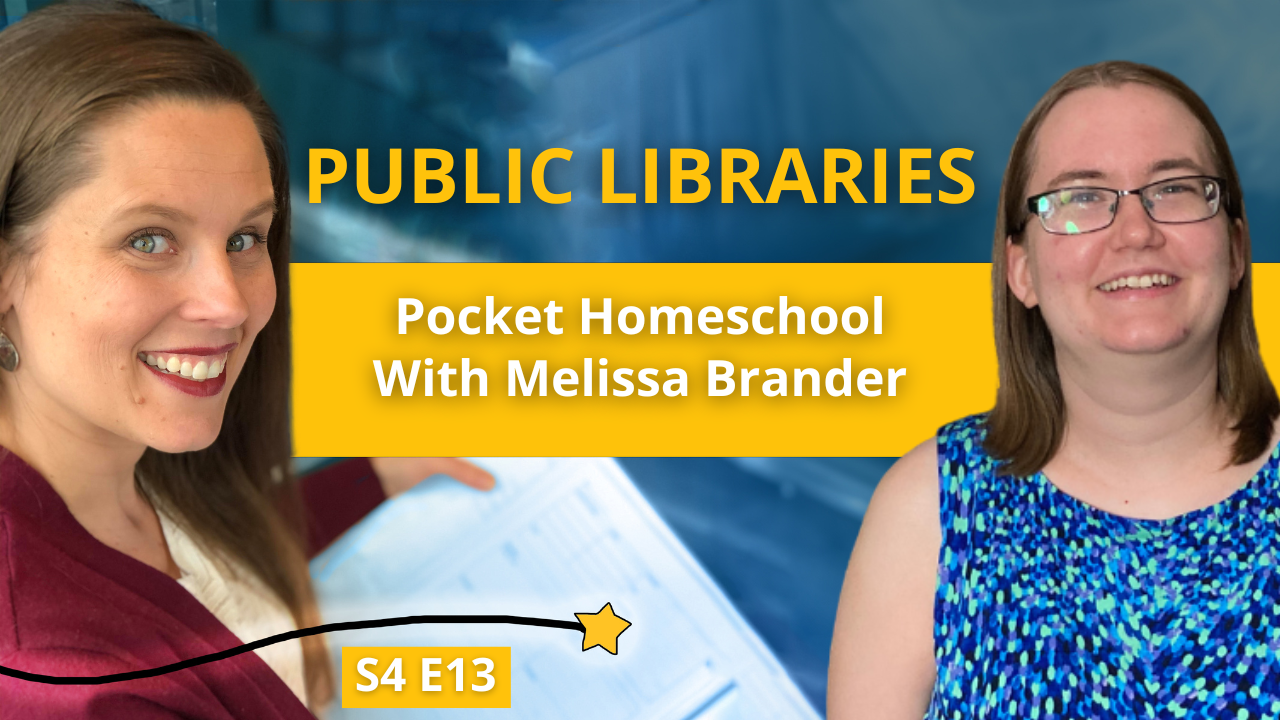
In this episode of Diary of a Dreamer, Tasha Eizinger talks with Melissa Brander, founder of Pocket Homeschool and Smart Homeschool Society, about how entrepreneurs and small-business owners can take advantage of these often-overlooked resources.
Don’t assume your library doesn’t offer something just because you’ve never seen it advertised.
Ask your librarian: What resources do you have for small-business owners? You may be surprised by the answers.
Before you spend money on a resource for your business, check your library first.
The best business resource in your community might already be sitting on a library shelf or waiting behind a librarian who knows exactly where to find it.
Read Transcript
00:00 : Welcome to Diary of a Dreamer, where resilience unlocks your potential. I’m Tasha Eizinger, and each week I’ll bring you powerful stories and practical insights from my own experiences and inspiring guests. Whether you’re facing challenges or chasing dreams, this podcast is your goto for motivation, building confidence, and practical tips for transforming obstacles into opportunities. Be sure to check out my website, TashaEizinger.com. Let’s dive into today’s episode and start turning your dreams into reality.
00:35 : Today we are with Melissa Brander. She is the founder of Pocket Homeschool and the Smart Homeschool Society. She has so many great resources about like how homeschooling families can do libraries. And of course, we wanted to talk about small business owners and just like libraries and the accessibility. I know that Melissa, we’ve gotten to do some things in the past. I’ve really enjoyed getting to know you and know that you value people, you value helping and serving. And so I’m really excited to learn from you today and hear. how you’ve used your library because i’m currently at my library using the green screen room so it’s great thank you for being here
01:23 : Thank you so much Tasha for having me i’m really excited about today like i just love libraries with my whole heart since i was like a little little girl and so they have so many amazing resources for everyone so i’m excited to talk today about like this specific use of libraries because when you’re in different stages of your life, you need different things. And the library has something different for every stage. So I’m excited to have this conversation.
01:50 : Yeah. Well, and we were talking before we started recording that we both live in areas that have really nice libraries. There’s a lot of accessibility and a lot of options. And so obviously there’s going to be some people listening who will come from smaller towns or things like that. And I’m like, well, I don’t have that. My first thought is, well, then go to your library and ask for these resources because there’s probably grant money and things like that, right? To help them get resources.
02:19 : Yes, definitely. Most librarians really got into it because they have like a deep passion for serving their community in this way. And they want to serve their community like the most effective ways that they can. So they will often seek out feedback, but you can also like give your feedback as well about what would be helpful to you to see in your library. And sometimes depending on the state that you live in and the way that the library system is set up, you might have access to libraries. that are a little farther drive for you, but then bigger. Because in some states, your library card will work for multiple libraries. And so you might be able to access some resources a little farther away at a library or even get so many digital resources. You might have access to a bigger library’s digital resources, depending on how your library system is set up and structured.
03:11 : That makes sense. I was actually surprised. So where I live… I belong to the library in my town. And for only $50 a year, I can also belong to the library in my county. And they have multiple libraries within both of those systems. Is that how it works for you as well?
03:33 : So in my library, I can access all of the libraries in my county, like just with my one regular library card. I could. get access to libraries in the county surrounding me, some of them for a fee, some of them for free. But I live in a mid-sized metro area. So I have access to almost 30 libraries just in the county. So I have a lot of library access already. So I haven’t gone to the counties around me because the one in my county is the biggest one.
04:07 : Have you gone to all 30 libraries? Because that’s, I mean, you could go to one a week.
04:12 : I have been. I’ve been. I think it’s like actually now I feel like, oh, what if I get the exact number wrong on this podcast? So I’m not going to say the exact number of libraries. But. I personally, for my homeschool co-op, went to all the libraries and made a record of what different features and services they offer that’s unique. And I prepared that for other local homeschool families so they would know what resources were in the area. But they also last summer did a super fun library treasure hunt. And for every so many libraries that you visited, you got access to prize drawings and things like that. So we took the summer. to visit all of them again. And it was, we just had so much fun with that. I love libraries.
05:00 : Well, and I like that you’re pointing out that they all have something a little different to offer too. So hopefully when people are listening to this, if they’re like, oh, well, my local library doesn’t offer this, like check into your county, go to your librarians, find out what is available. Maybe there’s another one in the system or close by. And then if it’s not, of course, find a way to make it happen.
05:22 : Right. Yes. And you also have to think beyond just public libraries, too, because, for example, you might be able to access university libraries in your area, especially if it’s a I know in my state for publicly owned universities, we are able to access the university library, but also.
05:42 : The college where I was alumni at, which unfortunately has closed, but before it closed, I did have an alumni library card, which was like a free benefit that they offered to alumni of the library. So there are more libraries than just your regular public libraries. So you can also look at university libraries in your area or the university that you went to to see if you can get an alumni card.
06:06 : I didn’t know that. That makes so much sense because it’s like a public. institution, but I did not know. And
06:14 : I can’t guarantee it works the same in every state, but that’s what the librarians at the university and my state have told me that the resources there, you might not be able to get the same library card that a student has, but like I can walk in and use the resource or like schedule a time if there’s like a special resource that I need to see because they are publicly funded university libraries. And this might not be the same in every state, but it’s worth asking and finding out. And if you went to a… private university, or even if you went to a public one to see if they have alumni library cards, because that is a benefit that some colleges will offer when you attended there.
06:50 : That is so smart. I didn’t see I’m already learning from you. This is great. This is why I love doing this podcast. So where did your love for libraries begin? Because I hear. like your passion about it i know i’m so grateful for the resources but i can hear a lot of passion from you uh
07:11 : i think it started all when i was a little girl i used to go to the library with my mom and dad and i don’t even know like we were not like super library users. Like now I’m a super library user. We were more just like average library users, but I loved it. I grew up like doing the summer reading. And then when I got older, I would bike to the library. Uh, one summer I spent my, um, My community offered that if a kid had a library card, you could use the library card as a bus pass to go specifically to the library. Like you could show your library card and get on the bus and you could ride to the library. And another summer that they didn’t offer that, they did offer like kids could get like a cheap bus pass for like the whole summer.
08:00 : And it was like specifically a youth summer bus pass. And so I saved up my money so I could go because I could bike to our smaller library. But I wanted to also be able to go to the bigger library, which I needed the bus to take a bus to because it was farther away from my house. And so I like always found like creative ways to get to the library. And even when I was a teenager, I volunteered at my high school library and at the public library in my city. And that was a lot of fun that I had volunteering there and being on the teen advisory board, like being a part not just of volunteering, but of a specific group of teens who like had input on creating programs and other things like that. And I guess that just always stayed in college. I ended up working in my college library. and uh so i guess that it’s just always been there. The libraries are such an amazing example of the concept of a third space, which is a space that’s not your home and not work where you can just like exist and be. There are not a lot of spaces left in this country where you can just go and be in a place without the expectation to spend money or to work your job or everything like that. And so libraries serve as a really important community third space.
09:20 : It does. And you know, it’s amazing. Both of my kids, when they were younger, if there was like a time period where we hadn’t gone to the library and we would come in, they would talk about like, oh, it smells so good. Like you can smell the books and they’re like, it feels like coming home. Yes. It’s a safe space to, like you said, exist and just to be. to be alone with like your thoughts and imagination and to create or whatever it is just to explore the possibility. So you’re right. There’s not a whole lot of public places where that’s available in our country.
09:59 : Yes. And I didn’t come up with a third space concept. I forget the scholar who came up with it. But if you Google third spaces, you can read like a whole a lot more about the whole concept of having spaces that is not your home and not your work that exists where you like a third space. That’s why they’re called third spaces.
10:19 : Yeah, I love that. I’m going to think about that now every time I go to the library. Like, yeah, it is a third. It’s a safe third space, little nook in the world, if you will.
10:29 : But of course, when you are like a self-employed entrepreneur, you can also use it as your workspace because libraries do offer free Wi-Fi and so many other like amenities. Like if you need a space that’s not your house to work, but like renting an office space can get expensive. Like the library can be a great option for you to work. And some of them will even have dedicated like nooks or small rooms specifically designated as like a quiet area for people who are. are looking to work and get, and get more stuff done as opposed to some other areas of the library, which might be more open and used for conversation.
11:07 : Yeah, you’re absolutely right. And St. Joe County Public Library, I’m going to, I just love always endorsing them because the main ranch in particular is where I’m at right now. They, they have so many resources for small business owners, including LinkedIn learning. that’s a tremendous resource they have databases they have different people here where they have specialties so i like to ask in studio 304 i’m like what’s your specialty what do you do really well or enjoy and they have like all the adobe suite and can help you they can’t sit there with you like one-on-one and give you their afternoon they’re too busy for that but i do think it’s important which you’ve already hit on like go into your library and ask the questions like what’s available here because librarians are so excited and passionate too
12:01 : Yes. And I know you said you can’t sit one on one with them, but sometimes you can, depending on the way your library is structured. Like I live in a big enough library system that they actually have a person whose position is called a business librarian and small businesses can book time with the business librarian to help them find certain library resources related to their business. So depending on your library system and how big it is, you may have a business librarian or another similar. position where you could have some time with them and find out specifically, I need to do this. Is there a way the library can help me do this and find that out?
12:40 : That’s a cool title. Yeah. Right. Business librarian. That’d be so fun. I do think also what I found is they really do care about helping people find answers. Yes. They get asked, like, because I work here a lot on different projects. And I will hear while I’m working different questions. And they’re typically so patient, very kind. They’re used to getting asked a little bit of everything. And they’re going to either be honest and say, you know, we’re not able to help with that. Or here’s where you can go, even if it’s outside of the community, like outside of the library.
13:18 : I mean, it’s pretty interesting.
13:20 : librarians are so resourceful like that is one of my favorite parts of librarians is that like part of their training and part of like who they are is that they are gonna do their best to help you find the resources and if they don’t have an answer for you immediately like just this week I was trying to do something at the library and uh the person that i was chatting with they did not know how to do it but they knew it was possible so they were like i’m gonna send your message on over to this other librarian who works with that more directly and then that other librarian who worked with that more directly got back to me and helped me figure it out so like librarians are resourceful and of course i cannot speak for all librarians everywhere but i have met so many wonderful librarians in my life that i truly genuinely believe most of them are out there being the most resourceful like coolest people who like Just want to nerd out about stuff with you because they have spent a lot of time learning about this stuff. And they really, truly enjoy helping and connecting people to the resources of the library. Because when more people use those library resources, that’s what helps make them available for other peoples. Because libraries have to often track their stats and track their usage and things like that. And if they see that a resource that they have available isn’t being used. Then when they have to make tough questions about funding, then they may choose not to continue using that resource. So when you use the library’s resources, like sometimes people will feel like bad about it. Like, oh, I’m using this like and other people aren’t, you know, having the opportunity maybe to use it because they like checked it out or you like booked the time. But using the resource is what helps to make them to continue to be available for people in the future.
15:12 : Yeah, you bring up a very good point. They do have a budget and they have guidelines within that budget of where it makes sense to allocate the money. And, you know, not too far off from like actual small businesses, right? They need to know where are people utilizing the resources? How effective is it? How many people are showing up? Are we going to keep funding this? So what are some ways that we can, other than using our library, what are some ways that we can support it? Because we do want them well-funded. Yes. Because everybody in the community benefits. I see so many different people coming and going at the libraries, and I’m sure you do too, that we’re all benefiting as a community from these incredible resources.
15:58 : Yes. Well, oftentimes libraries will have what’s called a friends group and they’ll be called like friends of whatever library. And that’s like an external source that helps support the library through like fundraisers and things like that. That’s a really great opportunity to get involved with if you have the time and energy to be involved with even just attending their events. And it’s a really good way to network with other people in your community as well. And some libraries actually even have a board. Some boards might be volunteering, but depending on your business experience, you could be potentially really helpful to the library to sit on their board, depending on the process for becoming a board member and all of that. I’ve never been on a library board, so I don’t know the process very well, but that is, you know, like a lot of… even though they’re not technically a nonprofit, many of them still have a board that helps them make their decisions. And if you have special expertise, that could be an opportunity for you to give back to your community.
17:01 : That is, yeah, that’s really good advice. And I’m sure like the boards are set up differently depending on the state and counties and things like that. So here again, everybody just needs to ask. I think there’s going to be a broken record on that. Just go to your library and ask. But these are good seeds to plant of how we can support them. I know at one point our local government was going to cut funding. And word got out. And you better believe when moms found out that their babies were going to miss out on these opportunities, people showed up at the meeting and were like, please do not cut the funding. And they chose not to because they saw there are so many people who care about this, whether it’s from baby lapses to. you know, different programming for kids. Of course we have adult programming and then all the other resources available. So like, what are some of your favorite things or maybe surprising things? Like I didn’t know that our library here can print posters.
18:05 : Yes. That’s great. Cause it’s so,
18:07 : they do it at cost. Yes. And if you only need like a few posters printed. buying them online i mean you’re looking at 20 25 bucks easily for a big poster online and here it was like 10 or something
18:21 : yes
18:22 : what and
18:23 : a lot of libraries now like printing the posters made me think of this but a lot of libraries now are getting makerspaces and they have access to like various tools through the makerspaces that you might use to like you know maybe you don’t need access to this tool all the time so it doesn’t make sense for you to buy all the time but maybe you’re planning an event and it would be helpful to you if you had you know one of our libraries here like has a laser cutter right like maybe there’s some stuff you need for event laser cut out or 3d printed or like like various resources, like especially as more libraries have makerspaces, they have access to some of that more like specialty equipment that might be cost prohibitive to you. And of course, if you were like building your whole business out of 3D printing stuff, it would not make sense to use the library’s 3D printer because. there are other patrons that need to use it too. But if say you’re hosting an event and you find this tool and you’re like, oh, this tool would be really helpful for the event if I had it 3D printed, like libraries are great for uses like that. Not your whole business, but like one-off uses that you’re going to need.
19:27 : That was a good point because that was one of my questions is like, what’s your capacity? How many could be printed? Yes. Right. So I do think that’s a fair question to ask because it’s I mean, they do have good quality things a lot of times that can be pretty efficient. But you’re right. Other people in the community. This is for everybody in the community that it’s not for mass producing your Etsy store.
19:50 : Yes, exactly. Exactly.
19:53 : Oh, my. So what are do you think some of the most important resources? to use like i think the linkedin learning that we have available i haven’t even dove into that yet but that’s like free education yes right so i think that’s one that’s really important like what are some that you think people need to really see like, is this available that that would help small business owners? Yes,
20:25 : I think definitely beyond just LinkedIn learning, a lot of libraries have access to various databases or learning things. Like I’ve even seen libraries have access to like courses on Udemy and things like that. So definitely diving into like the online course options and databases that your library offers because like sometimes you might need to search something in a in a special in a specialized kind of database depending on what you’re looking for and libraries will often have a lot of those specialized type of databases and if you can’t find what you’re looking for in a specialized type of database guess what they also have people to help you search for it in the database and so definitely like don’t sleep on those online resources like every life library has a little bit different. And even like getting creative, if there’s maybe like another language that it would help you to know in your business, libraries have language learning resources, like there are so many creative uses of libraries, maybe outside of what you would immediately think of for your business, that if you are wondering, oh, I have this problem. Is there a tool that could help me with this? Like check first at your library and see if they have it because the wealth of resources that they have, and especially I find those like databases and online learning resources are not as well known, but they can have like courses for like how to run a small business or even sometimes like events like also be looking at the event calendar because i know like for example some events that i’ve seen my library host is that they brought in a photographer once and they did like free headshots for people for yeah for business for business owners like you could go and get a free headshot um things like that so looking at the events too to see if there are any that are focused on businesses or that are like because they’ll also have educational events sometimes,
22:26 : you know, they’ll bring in a speaker who will speak about, you know, tools for your business or different things like that. So looking at the events too, to see if they have anything there that would be helpful to you can also be, also be a good place to check.
22:41 : Okay. I want to backtrack. What is Udemy? I’ve never heard of that before. It’s like an online
22:46 : course learning website. I haven’t used it a lot. I’ve just seen it as an option, but they have different online courses that you can learn from.
22:54 : Interesting. How do you spell that?
22:56 : U-D-E-M-Y.
22:58 : I’m curious. I think it’s interesting all the online learning that we can do. Yes. But now it’s… It’s good and it’s overwhelming, right? Because there’s so many things that we can learn like we’re inundated with information. But also I feel like that I don’t know how or I don’t know where is now just an excuse because it is so readily available.
23:23 : Yes. And maybe you’re listening to this and you haven’t taken action yet on starting your business and doing some basic level learning might help you. You should see if your library has any online courses that can be taken. And because that could be a really great place to start if you’re still in this dreaming stage where you’re just thinking about it, but feeling like you need the confidence or even just looking for books. There are like a thousand books on how to start a business. I guarantee your library will have at least… at least a handful of them. Or sometimes if there’s like a really specific skill that I’m trying to learn, like I’ll go to the library and I’ll look for like books on email marketing. And you know, it’s not the same. It’s not always the same because it won’t be 100% up to date like it is online. But it’s really great if you Like I learn really well from that format. I feel like I can take notes and get ideas or even just I’ve read like some books on like creative business use or even reading about other business owners and how they started their business can be really inspiring. And I would almost guarantee it that your library has books on all of those things because they are very broad topics and they’re not niche. I guarantee you they have at least one autobiography of a business owner that you can read how they got their company started. Like a lot of these resources, I’m like, I can’t guarantee that your library has them, but I’m pretty sure they will
24:48 : have this. Absolutely. Well, also you can request books. Yes. Right. So that’s how actually some of my little shop books I’ve gotten in libraries is people went in and requested that the library made them available.
25:01 : Yes.
25:01 : So you can go in instead of spending. your money i know sometimes it’s faster and easier just to buy it or maybe if you want to write in your own book i get that but if you’re like i don’t want to spend the money on it and i have like a book list submit a request yes
25:17 : Almost every library has a process where you can submit requests and then they’ll look at the book. They’ll look at their budget. They’ll look at how it fits with their current collection goals because most libraries have collection goals because they cannot fit every book ever on their shelf. So they want to make sure that the books that they’re ordering are going to be a good fit for the books that their community needs.
25:39 : Submitting a request is a really good way to tell your library that your community is looking for this book because that’s how libraries know. They can look at all the data that they have, but they can also hear directly from their patrons what they’re looking for.
25:55 : Yeah, I do think that that’s an interesting thought as well because, okay, small businesses exist to solve problems. Right. That’s why it’s there. There’s a problem and the small business comes in for a solution. And I feel like with the library spaces, they’re looking at being like a solution for everybody. But it needs to be like the majority of the people here. Again, it needs to fit within what makes sense for the community. Yes. And so I think kind of coming full circle, it’s like, you know, checking with your universities where you’re an alumni.
26:33 : looking around because just because like your little nook area doesn’t have certain things, maybe it doesn’t serve the community for you to belong there, right? Like you need to go somewhere else. Yes. In your system. because they can’t possibly solve all the problems.
26:53 : Yes. Though they will really try. They will really try in my experience. And yeah, but libraries, when they are making decisions about collections and programs and things like that, they are looking like, what’s the need in our community? For example, I live near a language immersion school. So the library that I go to, they have probably a lot. larger than average for most library collection of children’s books in that foreign language, because we have a language immersion school, like just a few blocks away from it. So they know that the families that send their kids there, they’re also the kids are also going to need like more children’s books to read in that language. And so they are looking at their communities and seeing what the need is there. And so you know, maybe you are seeing, oh, there’s not a lot of uh events you know for business owners you can ask you know oh hey would you think about having an event, like a networking event for other local small business owners. Is that a program that you would think about hosting? Or I know, Tasha, that you have done events at your local library. Depending on the library and the policy, some libraries do have policies where for-profit entities cannot rent their rooms. So it depends a lot on the library policies. But other times, for-profit entities are able to rent their rooms. that can be a more affordable event space than a lot of other event spaces out there because event spaces are crazy expensive. Like they, they, the costs can just rack up. So look at your library, like read their room use policies really carefully to see if it’s there or, you know, you can approach your library and say, you know, that you want to do this event as part of it, like most libraries, they have a certain amount of budgets for programs. And sometimes you can work directly with a library to do like a library sponsored event, depending on what your event is. And you wouldn’t necessarily earn profit in the same way. But depending on what your business is, and depending on what the library process and everything is like, it can be a really good way to Be in the community and be like a trusted resource because I think people do trust, you know, if a library is putting on a program, they trust that the librarians have vetted this person and that it’s like a good and not like a scam or anything like that. So, you know, partnering with your local library can be an invaluable resource in terms of like, you know, doing events for your community.
29:40 : I am. It’ll depend, of course, on what your business are, right? Some businesses are better suited to like in-person events than others, but it can be a really good way to connect or maybe even ask like, is there anything? Because I will see sometimes when libraries want to do bigger things, they will have outside businesses sponsor the event that they want to do. So you can ask, is there anything that you might need a sponsor for that I could sponsor, you know, get my name out there? or like donating prizes. That’s another option, like especially many libraries have summer reading programs, not just for kids now, but also for adults. And so if depending on what kind of product or service you have, potentially you could approach the library and ask about donating a prize for an event like summer reading. And because I know… We have several local businesses like local restaurants and things like that that will donate gift cards and prizes for for summer reading because we do have kids and adults summer reading. And so depending on what you offer, that might be an option to to like get your name out there and get some publicity.
30:54 : That’s great information. And you’re right about the events. It is a little different, but based on the library of like what they allow. But having my little shop party, it was a fraction of the cost on top of they provided, you know, the tables, the chairs, the tablecloths, poster stands, computers. I mean, all of the things that were available made it much more affordable.
31:23 : Yes.
31:24 : So one of the library’s systems in our area, they don’t let for profits. It’s just not going to happen. Whereas this other one, St. Joe County Public Library, they allowed it. I just had to pay a small fee and it was very doable on top of all the resources that they had. So and I love the idea of small business owners thinking like, is there a way to make a donation?
31:51 : for advertising. And I know small businesses, we get hit up all the time, like, hey, can you donate this? Can you donate that? Can you get this for free? That sort of thing. So I understand sometimes it’s too hard to always say yes. But if you’re strategic, like you’re saying, if there’s adult programs or, you know, reading challenges for kids, that it fits your business, that’s a great idea.
32:13 : Melissa. Yes. And just like thinking about like, what is your goal? What is your audience? Especially if you are wanting to build a more local audience, like that’s a really good way to get eyeballs on things. Even just looking like what are a lot of libraries have community bulletin boards, looking at what are the policies on. putting flyers or anything on those community bulletin boards. Sometimes they have to be librarian approved. Sometimes you can just put things on them. But even, you know, if you have an advertisement, your library might have a community bulletin board where you can put a flyer on depending on the rules of the community bulletin board use. But it’s worth asking if you’ve noticed there’s a community bulletin board or if you haven’t noticed, you can say, hey, is there anywhere the community can put notices up? Like I’m whenever I go to a library. I’m always looking for the community bulletin board. I’m like, what’s going on here? Like I am always, this is, this is how I find most of my library resources is just going to the library and keeping my eyes open because they’ll have flyers about programs. Sometimes they have like bookmarks with information about their various resources on them, or they have like little flyers explaining how to do something at the library, like how to use library printing and everything like that. So just like. a lot of things I’ve learned from talking to the librarians, but a lot of things I’ve just learned by keeping my eyes open and looking for what they, because they want you to know about these resources. So they usually have like information about these resources around in flyers or brochures or on posters or so like you can learn a lot just by keeping your eyes open when you go to the library, which sounds like very basic advice, but it is so helpful.
34:00 : I’m just laughing because I’m like, how many times have I probably asked a question and they’re like, it’s right on this. So you’re right. We get so focused on and set in our routines in ways that we don’t take the time to like put our head up and look around. And that’s just good life advice. Yes.
34:20 : And sometimes like this is another thing that I just thought of is that sometimes libraries will host career fairs, too. So maybe if you are like, you know, at the point where you’re looking to hire somebody or like maybe your library has a fair for interns or anything like that. I know small businesses come in all sizes. I’m a one woman show. But maybe you are at the point where you need to hire employees and you can see, you know, if the library is offering like opportunities for like.
34:50 : they do a lot like this is another thing that people don’t realize about libraries is that they are also often not always but often they are interested in helping people find jobs and they will have like services and resources available to job seekers. Like I can think of a library here that will help people like put together their resume and things like that. So like maybe you are not in the place where you are like seeking a job, but maybe you are in the place where you are looking to hire people. You could see if the library has any resources for helping connect you with people who are looking for jobs.
35:26 : That’s a really great tip. I didn’t even think about that. It is kind of your one-stop shop for sure. I’ve heard of somebody in another library system that every tax season, they have CPAs come in and help people do their taxes. Now, of course, you do what makes sense for you, right? And I don’t know that that’s always makes sense for small business owners. But these people are like, we’re pretty much retired. Like our taxes are very easy. We just want a professional to do them.
6:01 : like, what a great resource. And I’ve also seen sometimes they’ve had like attorneys come in to answer basic questions. I mean, just asking one question from an attorney, you’re shelling out hundreds of dollars. Yes. Every question that you ask. So even just having. Having those kinds of things where you’re paying attention, looking around, asking questions to see, you know, find things maybe in your business that does cost you a lot of money that you don’t want to be spending the money on. Are there ways to be creative and have them available as well?
36:38 : Yes, that’s the one thing our library does, too, is they partner with the university. The university has a law school. So then they bring in like lawyers and training with like supervising lawyers and the lawyers and training will like help you with your legal questions. And the supervising lawyer will look over it to make sure that they’re doing the thing that they need to be doing. But it’s like great because they get experience that they really need as well. And it also helps the community out, too.
37:05 : That’s a great win-win. Yeah. I feel like I think was it Stephen Covey is like think win-win. I think he’s the one that really teaches about that. But anytime that you can think of this is going to benefit me, how can it also benefit somebody else in the community or the person providing that service? Right. Because there are a lot of highly intelligent, highly capable people in every community. Yeah. It’s just getting connected to them.
37:33 : Yes. Definitely. And the library can be a great place to get connected and meet people in your community. Like it’s, it’s so awesome. Like thinking about all the library experiences that I’ve had, even not busy, like I could go on and on for like days. I’m trying to keep this like really focused on things that will help you in your business. But I could go on and on for days. Like I went to this training at the library that the office of emergency management for our area put on that was like basically like what do you need to think about like in a disaster situation how can you be prepared everything like that and then you know what like a year later our basement flooded when we had really horrible storms and I was able to use like some of that information that I learned to like help us get through and to like kind of know what the steps in the process were and everything like that when when you you’re in what will eventually like eventually a disaster was declared and we had to work with FEMA and things like that. And so like. That I got the first I got the ball rolling to have that like background knowledge from something I attended at the library, which at the time I was like, well, it’s good to be prepared for emergencies. But I didn’t know that I would have like my own emergency later down the line. So I could go like on and on. Libraries are incredible resource, even if beyond your small business owner life. If you are just interested or passionate or curious about things like that’s the great part about the library is like most stuff is free or very cheap. So even if you are not sure if it’s the best fit for you, you can check out that free resource first. And if you do that free resource, like say you do an online course and you’re like, well, that course didn’t teach me enough. Like, guess what? It was free. You’re not out any money, which is way better than spending like so much money for an online course to teach you something and then realizing that it did not teach you anything at all. And now you’re just out all that money.
39:32 : Absolutely. You know, I feel like you’ve inspired me. I need to look into all this LinkedIn learning that’s like right at my fingertips with all this free learning right there because there are niche topics available as well. um yeah i’m really grateful that you came on today to share about your passion and some of the stuff you shared i’m actually going to let my local library know like hey do you guys have this available or can we get this to happen um because it is important that we learn what’s going on And other systems and bring it in for our own community. So I learned a lot from you, Melissa. Yeah,
40:16 : I could go on and on. Like I have done versions, like in case anybody is listening and was like, oh, what is like the homeschool specific version of this? I’ve done homeschool versions of this talk, too. So that’s like, like, like reach out to me and I can share with you more about like homeschooling and libraries. Some of the other resources that I’ve created to help you think about the. homeschool tools that libraries have.
40:42 : How can people get in touch with you? So that way, if they are, first of all, wanting better resources or their homeschooling family, thinking about homeschooling, of course, like how can people get in contact with you?
40:56 : So my website is pocket homeschool.com. Like it’s spelled exactly like it sounds pocket, like, you know, pockets on your clothes. Like it’s awesome when dresses have pockets. Cause I think like having homeschool help in your pocket, right? Because I always think of like, we’re all carrying around this, this device in our hands, this phone in our hands. So we have access to all of these resources in our pocket, like future, not future generations, past generations could not have even imagined carrying around all the knowledge in our pocket. that we carry around today. So that’s my website where you can find me. I’m also on Facebook and Instagram under the same name. I always recommend people sign up for my email newsletter because that is where I send out the bulk majority of the resources that I come across. But you know, there’s also a contact me page on my website that you can reach out to me directly. And so, you know, like, just get in touch. I love, I love to talk to people and hear about it. And I’ll talk forever about libraries. But I actually, last summer, when I went to the Midwest Homeschool Expo, that was my entire talk was about using library resources in your homeschool. So I, I love and I love to share ideas about libraries, but about other stuff in homeschooling as well. So I would love to reach out to anyone who might be interested. And it’s like, it’s like a unique, a unique thing to be homeschooling and running your own small business at the same time. And so I don’t have a lot of resources for that. But I have some awesome friends who have put together resources for that. And I’d also be happy to like, point you in that direction as well. I think if you’re if you’re homeschooling, or even just curious about homeschooling. I’d love to hear from you and connect with you.
42:39 : Yes, thank you so much. I’ll make sure all of your information is in the show notes and everything as well so people can get in contact with you. You have such a big heart to serve, and I really appreciate you being here, Melissa.
42:51 : Thank you so much, Tasha, for having me. This was wonderful.
43:02 : Thank you for tuning into this episode of Diary of a Dreamer. I hope you found the stories and tips shared today to be a source of motivation and strength. Remember, every challenge you face is a chance to grow and move closer to your dreams. Don’t forget to subscribe, leave a review, and share this podcast with anyone who could use a boost of encouragement. Please check out my website, TashaEizinger.com.