


What if taking better care of your skin didn’t require a 12-step routine or a bathroom full of expensive products?
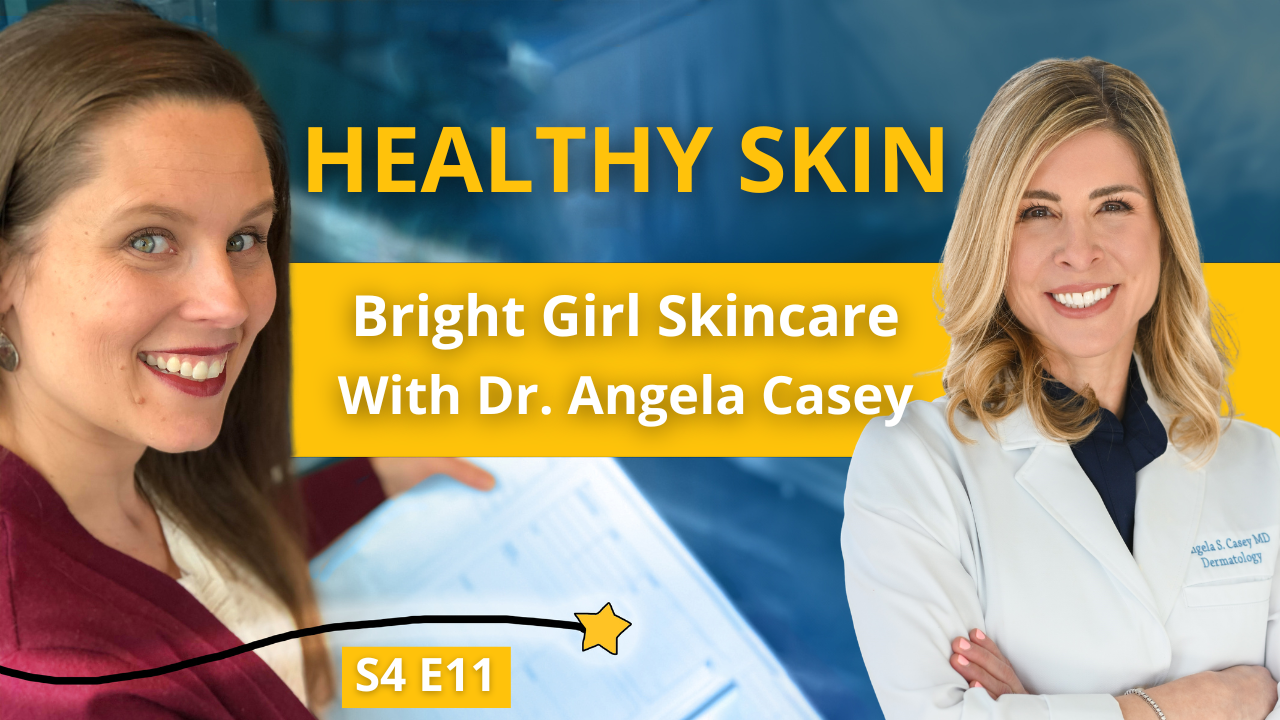
In this episode of Diary of a Dreamer, I sit down with Dr. Angela Casey, a double board-certified dermatologist and dermatologic surgeon, to talk about skin health, skincare for teens, sunscreen, skin cancer prevention, and how to cut through the noise of the beauty industry.
Dr. Angela is the founder of Bright Girl, a skincare brand created specifically for young people. Her mission is to help Gen Z and Gen Alpha develop healthy skincare habits early, using products grounded in dermatology research and designed to be approachable, effective, and something young people actually want to use.
We talk about how the habits we develop as children and teenagers can affect our skin decades later, why sunscreen is so important, how much skincare we actually need, what parents should know about teen skincare, and when a spot or mole deserves a visit to the dermatologist.
About Dr. Angela Casey
Dr. Angela Sanfilippo Casey is a double board-certified dermatologist and micrographic dermatologic surgeon specializing in skin cancer and cosmetic dermatology. She is a partner at a private practice center for surgical dermatology in Columbus, Ohio, and serves as assistant program director and head of dermatologic surgery for the OhioHealth Dermatology Residency Program.
Inspired by her daughters and her experience treating skin cancer, she founded Bright Girl, a skincare brand created to help young people develop healthy skincare habits.
Get Bright Girl
Learn more about Bright Girl skincare at Bright Girl.
Use code DREAMER for 20% off.
Bright Girl products are also available through retailers mentioned in the episode, including Amazon, TikTok Shop, Macy’s, Nordstrom, and Beauty Space by Space NK.
A Note About This Episode
This episode is intended for educational and informational purposes and is not a substitute for personalized medical advice, diagnosis, or treatment. If you have concerns about your skin or notice a persistent or changing spot, talk with a qualified healthcare professional or dermatologist.
Read Transcript
00:00 Welcome to Diary of a Dreamer, where resilience unlocks your
potential. I’m Tasha Eizinger, and each week I’ll bring you powerful stories and
practical insights from my own experiences and inspiring guests. Whether
you’re facing challenges or chasing dreams, this podcast is your go-to for
motivation, building confidence, and practical tips for transforming obstacles
into opportunities. Be sure to check out my website, TashaEizinger.com. Let’s
dive into today’s episode and start turning your dreams into reality.
00:35 Today we are with Dr. Angela Sanfilippo Casey. She is a double
board certified dermatologist and micrographic dermatologic surgeon. which i
don’t even think i said that right so i cannot hear what that means with the
focus on skin cancer and cosmetic dermatology she is a partner in a suburban
private practice center for surgical dermatology in Columbus Ohio she is
assistant program director and the head of dermatologic surgery for the Ohio
health dermatology residency program here’s the cliff notes Dr. Angela knows
what she’s talking about. That’s all we need to know. And I love that she started
Bright Girl Cosmetics because she was inspired as a mom, which is why I
became an author.
01:25 I was inspired with motherhood. And it’s so special what
moms can do when we set our minds to it, especially with Dr. Angela’s
background. So thank you for being here and educating us today.
01:39 Oh, Tasha, I am so honored. It is such a privilege to be here
joining you and connecting with your community. Thank you.
01:47 Absolutely. So I know that you obviously have your background in dermatology, so it makes sense why you would start a cosmetic,
something cosmetic, which means you’re obviously a researcher. You were
committed as a mom, I’m assuming, and you’re business minded as well. but
what was it that made you decide i’m gonna invest the massive number of
hours in creating bright girl well
02:17 in a nutshell i couldn’t call myself a health care provider if i
didn’t care enough to make a difference and change the system as it exists
currently so as you mentioned i’m a dermatologist and dermatologic surgeon
and with that long title that you earlier yeah it’s a lot of words um but in my
practice all day every day i treat skin cancers and i do that through a process
called mo’s micrographic surgery which involves my surgically removing the
cancer while the patient’s in office, just under local anesthesia, so the patient’s
awake. I then bring that piece of skin that I’ve surgically removed to our lab
down the hall where it’s processed so that I can look at it under the microscope
and map out all of those skin cancer cells in relation to normal skin in a three-
dimensional manner that allows us to be so precise and meticulous and making
sure we get out each and every skin cancer cell without taking extra healthy
skin beyond what we need. So I’m operating on the head and neck of almost all
my patients, right? Noses, lips, ears, places where every millimeter counts. And
we want to get those skin cancers out. Once we’ve done that and we’ve
confirmed clear margins all the way around, then I do reconstructive surgery.
So it’s all done same day. I treat skin cancers that, and most of my patients, I
would say, are ages 40 and above. But the skin cancers I’m treating today did
not start five or 10 years ago. They started in the childhood and teenage years.
03:58 Mom, you’re probably worried about your own kids. Like, what
can I do to ensure that I would not be their doctor in decades later, right? You
04:09 are 100%. I do not want our young… generations ending up in
my operating room getting skin cancer surgically removed because it is so
preventable and that is the mission with bright girl skin care is that we really
get ahead of the skin damage we teach those good habits we excite young
people about implementing good skin care and that we give them the tools and
resources to do so because you know you’re a mom i’m a mom it can be so
confusing when we go into target or ultra and Sephora, there’s so many options
to choose from. And it’s like, what in the world is right for our young person?And what is something that they’re going to look forward to using every day?
That’s just as important. Well,
04:55 and I’m looking at your packaging and I’m thinking, oh, my
kids would be like, oh, that looks so fun. So great job. But it also looks mature.
It’s not too kid like, but it is fun. packaging that it’s so funny how my kids fall
for that they’re like oh i want this thing and i’m like don’t fall for the packaging
05:18 For them, it’s all about the packaging. It has to look pretty in
their bathroom. They have to be proud of it. For our teenagers, they want it to
look good on social media. So you’ve got to incorporate all of those. So we
absolutely were very intentional with the Bright Girl packaging. And we’re really
talking to Gen Z and Gen Alpha through the brand. That’s our target
demographic. But as lovely and colorful and fun as the packaging is, the true
magic is the formulations with it. And I’m so proud of what we created.
05:50 Well, that was one of my main questions I wanted to ask you,
because my first thing I tell my older daughter when she’s like, look at the
packaging, I’m like, turn it over and look at the ingredients. Because U.S.
companies are known for putting horrible ingredients in skincare and our skin’s
the largest organ on our body and it absorbs it. Right. It goes into our body
system. So it’s important what we’re putting on our skin. I would love to know
what makes Bright Girl different than what we’re seeing on the shelves already.
06:25 Yeah, you’re very right, Tasha. In the U.S., we have a much
broader range of quote unquote safe ingredients. And when you compare the
many thousands of ingredients that are approved in the U.S. compared to
European or Korean standards where it’s. really in the hundreds there is a big
differential there and it allows a lot more room for potentially irritating
potentially harmful potentially hormone disrupting ingredients to get into our
personal care products and you and i know as moms that any when that we can
give our kiddos in that department, whether it’s through personal care products
or through their food or other fabrics, other things that they’re exposed to, any
time that we can eliminate those potentially harmful ingredients, that’s a good
thing. So with Bright Girl, a few things. I went back to the white papers, so the
research papers in dermatology, and dove deep into ingredients and really
looking. What are the clinical studies? What’s the evidence? Like, let’s not pick
an ingredient just because it sounds fun. Like, let’s look at the data. And so it’svery data, very science driven in terms of the ingredient selection and how
those ingredients are going to perform in the skin. So that’s first and foremost.
Secondly, of course, I wanted to leave out any potentially questionable
ingredient in terms of harm or hormone disruption. So paraben free, sulfate
free. phthalate-free, free of methyl isothiazolinose. And then, of course, the
wide range of ingredients that I know as a dermatologist can be irritating to the
skin. So we have a whole list of what I call no thank you ingredients that I don’t
want on my daughter’s skin and most parents probably don’t want. But I’ve
taken the guesswork out for parents, so they don’t have to worry about that. In
a nutshell, we formulated Bright Girl to meet Whole Foods standards. Sephora
clean standards, which are among the most rigorous in the beauty industry.
We’re not in Whole Foods or in Sephora yet. We are in many other retailers and
we can get to that later. But they have the most stringent regulations and
safeguards. And so as I was working with our chemists, I said, let’s just like.
08:49 be extra, extra careful. Like I just don’t want any question. I
don’t want any guesswork. I want parents to feel safe and confident and trust
this brand. And that’s what we’ve brought to market.
09:01 What I appreciate about everything you had to say is you did
your marketing the way it should be done. You weren’t looking at buzzwords
that it’s a buzzword for a while. And then it’s replaced with the next buzzword.
You did your marketing exactly the way it should be done. ensure high quality
products but it’s the packaging right whereas a lot of companies they do lower
quality products ingredients with fancy words that everybody’s hearing and the
packaging so thank you for creating a product that’s good enough for your kids
and also good enough for mine
09:41 You are welcome. And just to put a fine point on this point of
the conversation, we also did full IRB approved clinical studies with the Bright
Girl line. So what that means. Yeah. Yeah. So that is a very scientific. So in the
pharmaceutical world, in any sort of cosmetic regulation, it is above and beyond
to do clinical studies. in a research center setting where you have actual
patients testing the products and objectively measuring data throughout a
extended time period. And it is… very expensive. It’s very time consuming. Um,
it’s just a lot of resources that go in. So this is, these are the types of studies
that any like sunscreen goes through that anything that’s over the counter, likepharmaceutical goes through, but it is above and beyond what most skincare
brands go through. Most of them, they can go to shelf without ever having to
do those studies. I wanted to do better than that. And thank you. And our
studies were done in the teenage population and bottom line showing safety
and effectiveness. efficacy of the bright girl line for the teen population and
improving acne skin tones skin hydration texture clarity so all of these metrics
that we have which is very cool and just to mention those studies were done
completely objectively so i didn’t do them they were done in a renowned
dermatology research center up in connecticut i have no ties with the people i
don’t know the dermatologists that run those. It just had to be not subjective or
biased at all. That was really important to me. And I’m really proud of what they
found. And I can share that now. It’s not just like an anecdotal, cute story. Like
this is a nice line and it’s made by a dermatologist. We have the evidence to
back it up.
11:47 Oh, well done. So I’m always fascinated by the process. So you
had the idea. You went to all the research that was already available. You said
these things are a firm no in the ingredients. You went into the formulation
process. Most businesses start in garages and basements, but I don’t think
that’s probably where you formulated, right? You were formulating in a lab or it
wasn’t your kitchen.
12:19 We do kind of, we did start in our basement in the sense that
not with formulation, but when we packed our first orders, when we were
fulfilling them, yes, they were from our basement. But no, again, just again,
keeping with those very rigorous standards, all of our products are formulated
in CGMP and FDA regulated facilities. So these are, again, the most stringent
governmental regulations. of all of the tests and hygiene stability tests and
microbial tests and making sure like everything works. So I am not a cosmetic
chemist. So I knew the ingredients that I wanted to go in the formulations and
what I wanted left out. I knew how I wanted them to feel and absorb and
spread on the skin, et cetera. But I needed to assemble a team of really
talented cosmetic chemists to bring that to life. So yeah, nothing was ever made
in our kitchen or in our basement. Once all the products are manufactured,
then we have the boxes and everything. So the jars and everything come to us
filled from the chemists, like everything’s sealed. in adherence with thoseregulations. But we actually ship out a lot of the products ourselves. And then
we have fulfillment centers all over the country, but we still do a percentage of
our fulfillment because it is how small brands start and it’s authentic to us. And
it’s really neat to have that connection with our community.
13:56 Yeah. Well, I think it makes it more special because someday
you’ll look back and say, oh, my goodness. Remember when we used to box
this up and now we have a manufacturing and processing facility? Like it does it
for us. You know, I think that that’s really it keeps you humble. And I do think
that’s part of the magic of small business owners. But you’ve also, like you’ve
already hit on, you elevated everything by ensuring it wasn’t just this is the
standard. You’re like, no, this is bright girl standard. It’s higher. We’re taking
what’s already acceptable, but we’re saying it’s unacceptable for our brand
because our brand is going to be top of the line.
14:39 Yeah, it really has to be is a double board certified
dermatologist and dermatologic surgeon. And my name is on those products.
I’m part of a large dermatology organization. I have a lot of leadership roles. If
all of those checks and balances are not completed all the way along the line,
like that reflects on my reputation and I would never put that in jeopardy. So
that’s first and foremost. Secondly, just getting back to that small brand. And
for any of your listeners that are entrepreneurs thinking about it, it’s been really
special to have our entire family involved in this process. So our daughters are
all now in the teen and tween age range. So they range between 11 and 17
years old. So they’ve been part of this. They have watched Bright Girl grow from
its… the time the idea the idea came to me back in 2019 to launching the brand
in 2022 to growing it and you know now and they see it we’re sold in hundreds
of dermatology practices across the country we’re in nordstrom and macy’s and
beauty space and tick tock shop and amazon and you know keep amazing
growing and they they’re watching all this and they’re they’re part of it and that
has been one of the neatest things along with all of the connections we’ve
made. through this process. So the people that we’ve met and the friendships
that have developed, the support that you and I were talking about, that
women, lifting women and empowering, like that is such the cool thing about
being an entrepreneur. It can be a challenging and lonely struggle at times, but
then you get these wins and you meet people that you never would have met16:28 otherwise. And that’s magic. It is magic. It really is. So what
age group is bright girl for specifically?
16:37 Ages eight through 24. And I say eight because that is really
when our young people are starting to develop opinions and a little bit more,
they’re more discerning about their personal care products. So they might not
want to use the bland white lotion that you have in their bathroom. They’re
seeing things on social media. They’re hearing things from friends and wanting
to have a little bit more of an opinion. So it is up to us. as parents to provide
safe options because they may come to us and say, oh, I saw this video and
they had this serum and this accelerator.
17:16 So we want to hear them and see them where they are and
acknowledge that, but also guide them in the right direction. And really, we
have so many college students, like post-college grads that are loving the brand
because it is all about teaching and empowerment. and frankly the products,
the formulations are just awesome. They are so beautiful and elevated. I
benchmarked the very best of the best. brands um that i’ve tried as a
dermatologist in the last couple of decades in formulating these but i wanted to
bring it to a price point that was more attainable so we’re more in like the 20 to
30 range but our moisturizer is just as good as the 90 one that you can get at
your dermatologist’s
18:05 office well and sometimes companies you know we tease like
with food it’s the same formula they just put a different label on it and can
charge you know, X dollars here, which is way more than over here. So just
because something’s more expensive does not mean that it’s higher end. It’s
just the label.
18:28 Yeah. Yeah. So we wanted to have some transparency there.
And it is very true. But if you, nobody’s going to buy a $60 moisturizer for their
15 year old.
18:41 We want
18:42 the brand to be accessible. But it is very special, so there’s an
aspirational component to it as well. And so I think the price is very fair in
reflecting the quality of the ingredients, the supply chain, the sourcing of
everything. We manufacture in small batches, so we are constantly offering
fresh product. And like I said, just meeting all those regulatory components with the regulations and FDA requirements so that we are delivering something
that’s very safe and effective. And sadly, in the cosmetics industry and skincare
industry, so I would say we’re skincare, not so much cosmetics, but
19:28 there’s
19:29 not a lot of regulations. put a lot of junk on the market and it
can be sold. So it just kind of a word to the wise for parents out there as you’re
looking at brands and often you get what you pay for.
19:45 Absolutely. Well, I know for sure. I already told my daughters,
I was like, this is going to be what we have in our home because I looked it up
and I was like looking at your credentials and knowing from mother to mother.
if this is good enough for your kids it’s certainly good enough for my kids so it
will definitely become a staple product in our house and my girls are so excited
thank
20:09 you so much just out of curiosity where do they get their skin
care information and where do they develop opinions on skin care is it from
friends is it from social media from school yeah
20:26 so my older daughter very much cares about skin care
because she’s in that age and i’ve told her you want to take good care of your
skin at a young age i did not do that i was in the generation that we put oil on
our skin and laid out in the sun and thought a base burn was a good idea
20:49 But so I said, it’s so important and like, take care of your
hands and your neck. Like, it’s so important. So we’ve talked about that. I’m like,
and not just for vanity, but your skin is important. So part of it is me talking
with them, but also my older daughter, she gets to watch a little bit of YouTube
shorts and she loves DIY things. And so she’ll put together her own concoctions
in the kitchen of like, you know, some coconut oil and some like lavender. And
she’s experimenting. And then, of course, from our dermatologist, because I go
regularly to the dermatologist, I’m covered in moles. I need somebody who can
monitor them. And so it’ll be like, well, these are OK over the counter products,
but I’m still not been happy with them. And that’s why I’m so grateful that I met
you because I think that
21:43 what’s available, what I’m seeing, I’m still not loving. So it’s a
combination of the dermatologist, YouTube shorts, and her mom. So she’s
getting her information.21:56 No, that’s really good. It’s helpful to have examples like this
because you’re right. Our young people are very discerning. They’re very fickle.
If you don’t knock their socks off with that first impression, they’re very unlikely
to come back. And with skincare… it never has to be complicated but it does
need to be consistent in order to be effective so you want to give them
products that they look forward to using you want to give them that sunscreen
that they crave that they just don’t feel like their day has started until they’ve
put that on and you want them to feel healthy and confident and empowered
and then you want them to go tell their friends i found the greatest sunscreen
ever because
22:45 90% of skin cancers are tied directly to ultraviolet exposure. So
that one simple… act of putting on sunscreen every day it has a tremendous
impact on decreasing skin cancer incidence and only about 20 percent of our
skin aging is genetic in nature and the other 80 percent is environmental and
lifestyle so we do have this tremendous opportunity to change the trajectory of
how our young people age that they’ll get to be age 50 and they’ll look like we
did at age 20. because they’ve had all the right things on board. The things that
you and I didn’t know when we were out frying our skin with our baby oil.
23:33 And that’s, it’s so horrible. And then we would say like, you
know, we got to get our base burn or before going out, I remember before
going to Florida, I’d be like, oh, I need to go to the tanning bed to get a little bit
tan, which isn’t a tan skin damage.
23:48 It is absolutely a marker of skin damage. A tan is your skin’s
way of reacting. It’s a defense mechanism of your skin to try to protect against
further damage. So it dispenses that what’s called melanin pigment, which is
turned on by the sun exposure. It activates these cells in our skin called
melanocytes and disperses that pigment that then acts as kind of a little bit of a
natural shield against that. uv damage because our skin it’s so intelligent it’s so
smart right it knows like oh this is bad and like we need to like send out all the
defenses to try to protect our skin and a tan a freckle um that is exactly what’s
happening so it really like let’s treat our skin with kindness it does a
tremendous amount for us and keeping us safe and regulating our body
temperature and mediating everything that’s going on inside of us with the
external environment. So we really should nurture and protect it as such.24:55 Okay. So for the people that are older than 24, which I
certainly am much older than 24. You don’t look like it. You’re very kind. I’ve
never been so conscious of what my skin looked like because I’m 42. And I was
like, oh my goodness. I’m meeting with Dr. Angela today.
25:19 Well, I think your skin looks fabulous. It’s glowing. It is
healthy. I can tell that you are implementing some good habits in your routine.
Thank
25:29 you. So what, what do you have like a sunscreen that people
over 24 should be using? What is a good. You already hit on this. It’s so
overwhelming. We are inundated with information. Most of it is marketing. It’s
not actually based and rooted in science. It’s just buzzwords. What should we be
doing when we are over 24?
25:58 Well, first and foremost, it’s not an exciting answer, but every
dermatologist will tell you a mineral-based sunscreen is the single most
important thing to put on your skin every day.
26:10 Let me interrupt you for a second. Because there’s a lot of
people who say, well, but the sun is important. We need to get the vitamin D.
Can you address that before we go deeper? I agree. Like sun is important. We
do need some vitamin D that is natural, but I think there’s a misconception
circulating around. So can you address that?
26:32 Yes. Vitamin D is critical. It is so fundamental for our health,
our metabolic health, our circadian rhythms, hormone health. It is just a non-
negotiable. We will almost never get the amount of vitamin D that we need
from the sun. The American Academy of Dermatology has done a lot of study
on this. It is
26:56 impossible to measure how
27:00 much skin should be exposed and what time of day you
should be out and for how long because it’s so variable depending on where we
live. So there’s no way to regulate or create guidelines for that. So I always tell
my patients, do not ever depend on sun exposure for your vitamin D. Take a
supplement. And the best way to handle that is to have your healthcare
provider measure your vitamin D levels so that you can supplement the perfect
amount and make sure that you’re staying within that optimal range.
27:37 Okay.27:38 also though do agree that sun exposure is really important for
our eyes for our circadian rhythm for our mental wellness for our metabolic
health so i never ever and and i don’t myself advocate staying indoors or
avoiding the sun no like let’s live our lives the critical part of all of this is to
avoid getting sunburned. Sunburns are where the harm occurs. It’s where the
real damage is occurring to the skin. It’s those ultraviolet rays are penetrating
all the way to the DNA of our skin cells and causing mutations and irregularity,
and then nothing’s functioning like it should. And that’s what can lead to a pre-
cancer or a cancer. But when we can implement those simple measures like
putting on sunscreen, wearing a wide brimmed hat, wearing some sun
protective clothing, we can still do all the things that we want to do. And I’ll be
honest, like when I go to the beach, I wear a bikini and I do not have like a rash
guard covering everything like every single time I’m out. Sometimes I do if
we’re out midday, but you’ve got to just be like. i don’t know like where’s the
right thing for you go play golf go play tennis just be smart about it i feel like
it’s kind
29:01 of like have a healthy respect for how powerful the sun can be
and what it can do but don’t fear it
29:07 exactly exactly so just like anything all things in moderation
right
29:14 okay thank you for addressing that because i do see that
circulating around of well you shouldn’t use any any sunscreen because you
need to get your vitamin D and all of that. So thank you for addressing that. So
let’s get back to people older than 24, got a product out, which, which
sunscreen do you recommend for us?
29:37 I use it myself. I wear it every day. So does my husband, who
is definitely not a teen girl.
29:45 This is our Bright Girl Tinted Sunscreen. And the reason I love
this is it has a sheer, it gives a sheer glow. So it has a little bit of tint. It’s an SPF
44. It has hyaluronic acid in it. So it’s very hydrating. It also protects against
blue light as well as UVA and UVB. It is one of the few sunscreens on the
market that protects against blue light. And honestly, Tasha, this formulation,
I’m biased. I know it’s mine. It is so gorgeous and glides on so smoothly. It
does not pill or clump. It works beautifully on its own. It works wonderfully ifyou want to put some foundation or makeup over it. It is such a win. i have
patients as old as 92 years old using this sunscreen every single day it is um
currently sold out because we have so many influencers on tick tock that are
obsessed with it and they are not teenagers um actually one of the big
influencers she’s 55 years old and she has a huge following almost a million
followers and she just sells through this like crazy.
30:59 So I love that. And it makes my heart smile. Yes. If there’s like
one thing we want to be getting out is good sunscreen and a good mineral
based sunscreen, which is they are very hard to find because most mineral
sunscreens tend to be thick and pasty. But I knew that that would not work for
our 18 year olds. If it was thick and pasty and clumpy, they were not going to
wear it. So we had to go above and beyond.
31:25 I absolutely love another thread I’m hearing as you’re talking.
Just because this is the way it’s done or always been done or other companies
do it this way, you’re like, nope, this will not work because the main mission is
creating healthy habits. So you’ve taken every objection possible and you’re just
knocking them out. I love that.
31:52 Thank you, Tasha. I mean, it is, we live it in our own world
with our own teenage daughters. If they don’t love something and they don’t
connect with a brand, they’re not going to come back. And that was really, so
there are lots of great skincare options on the market, but that’s where I saw
the void was brands that were really tailored and really speaking to Gen Z and
Gen Alpha and offering them something special and exceptional compared. to
what was on the market. So that’s kind of our niche of where we are. And as a
brand too, we’re incredibly focused on education. So it’s not just put on this
product. This is why this product is good for your skin. This is what’s happening
at the cellular level. On our packaging, we call out the pH of every product. And
I talk a lot about why skin pH is at a certain level and why it’s important to have
products that work with that.
32:50 PF mean? What’s the difference between a mineral and a
chemical sunscreen? So all of these things we really educate as a brand through
social media, through our website, blogs, newsletters, everything is knowledge
is power.
33:04 Absolutely. And, you know, this younger generation, they doknow how to research and like look things up. They’re constantly, I think they’re
going to be a generation that they’re not going to take things at face value.
Because they know there’s a lot of scammers out there and fraudulent people
that they have to sort and filter a lot more than what we did.
33:30 It’s really interesting when you look at the research, too,
about teenagers being able to differentiate between AI-generated information
and images compared to normal. And they’re actually much better at it than we
as adults are, which is great. It gives me hope.
33:50 sometimes i’m like oh my gosh what is happening to our
society and what is the future going to be like for our sweet daughters and are
all the jobs going to go away but but they do have um and that craving for that
emotional intelligence but being able to sort through um the a lot of the
marketing claims and all the noise that’s out there and that’s really important
34:14 I know that you have probably a very full schedule, but will
you please create like a bright women?
34:22 That’s a, yeah, bright, bright mom will be next.
34:26 Bright menopausal woman who doesn’t know what’s
happening in life.
34:31 Oh, I hear you. It’s possible. It’s the next, you know, when you
look at our history as women, it’s, you know, puberty is that first big shift and
then our pregnancies and then it’s the
34:44 perimenopausal years. Oh, that would be so funny. Bright
pregnancy, bright perimenopausal. The perimenopausal would be like step one.
It would just have a one. Right. I’m like, that’s all I need to know.
34:57 Right. It’s like, keep it very, very simple. But honestly, skincare
can be, it should be simple. And the beauty industry has really overcomplicated
things because they are focused on sales, right? Their success thrives on more
sales and more revenue. And that creates this bigger machine.
35:19 I’m here as a dermatologist to cut through that noise and tell
you it does not, your skincare regimen does not have to involve a long,
complicated routine in the morning. If you only put on a mineral sunscreen,
that’s all you need because this is going to moisturize your skin. It’s going to
protect. It’s going to have all of those components in place. All you really need
in the evening is a cleanser and a moisturizer.35:46 yes a nice beautiful like robust ph balance cleanser and a
moisturizer that’s going to hydrate your skin repair your skin barrier and give
you some of those ingredients to help your skin recover overnight so to break it
down to the bare basics now the caveat to that is if you have skin like ours right
because of the generation that we grew up in that needs a little bit more repair
and help that’s when we bring in some of the other products like a retinol or
maybe like a vitamin C serum, but you don’t have to get more complicated than
that, honestly. And that’s all I use myself, Tasha.
36:27 I use a retinoid cream at night and a vitamin C in the
morning, but I grew up in the eighties and nineties and had a lot of damage
and a lot of sunburns to my skin. So I can’t ignore that. I do have to do
something to correct
36:44 it. Yeah. I used to lay out in this. sun all the time. I do tasseled
corn in the sun. I don’t think we put sunscreen on very much. Now, my younger
brother being a redhead, he always had sunscreen on, right? But I don’t think
that was really a thing for the most part. So what I’m hearing is in the morning,
our generation, it would be wise to use a vitamin C serum. Are we supposed to
cleanse in the morning too? Because don’t we like…
37:11 Optional, optional. So if you are, yeah, I know we’re, we’re
dispelling a lot of myths here and all the dermatologists are going to side with
me on this. If you are someone who has really oily skin, or if you sweat a lot
when you sleep, then you’re going to want to get in the morning.
37:33 I mean, honestly, a lot of us, yeah, perimenopausal,
menopausal, we might be dealing with that. But if you are not, it is that you can
just do like a little warm water on your face in the morning and that’s all you
need to do. So in the shower, because it can be, you can tip the scales too
much in the other direction when you over cleanse your skin, because you’re
removing a lot of those protective oils, you’re irritating the skin. a little bit,
which is okay to a certain extent, but if you keep doing it, that skin barrier
breaks down and that’s what leads to inflammation, sensitivity. That’s when
patients coming in, they’re like, Dr. Casey, I’ve got sensitive skin. I’m like, well,
no, you don’t. You’re washing your skin three times a day and nobody’s skin
should be handling all of that. It’s too much and you’re not replenishing it
enough.38:24 Okay. So this is just a totally random question that popped
into my head, but But there are people, thinking of what you’re saying, there’s
beneficial bacteria and things in our skin already. So taking too many showers is
probably bad too, right?
38:40 Right, right. Hot showers.
38:42 They have to be hot.
38:44 That’s probably not good. It’s not the best thing for your skin.
Loop warm is the best thing for your skin,
38:50 but yeah, we’re going to have to agree to disagree.
38:53 That’s okay. I love a hot shower too. So I, yeah, I don’t walk
the walk when it comes to loop warm showers. It just is not going to do the
trick.
39:02 Okay. So taking too many showers, is it going to be healthy
either? Right. So how often is that recommended for healthy skin?
39:12 Yeah. So once a day showering, perfectly fine. Try not to do
more than that. Our skin does have a microbiome, as you mentioned. So
trillions actually of bacteria and fungi and viruses that live in our skin. It’s just
like our gut microbiome, which I’ll… I think a lot of individuals are more familiar
with. When we wipe out all the good stuff, so in our gut, for example, when we
take an antibiotic and it wipes everything out and then it kind of wreaks havoc
on our whole system and it takes a long time to recover from that, I think that’s
the best analogy I can come up with that individuals might understand. So our
skin microbiome, it’s like a whole community. It’s like this utopia. thriving
community where everything has a role and everything’s in checks and balances
and the good bacteria keep the bad bacteria away. And when we disrupt that
and it tips the scales so that those good bacteria are all of a sudden all wiped
out.
40:20 then the bad
40:21 actors come in and they’re like, oh yeah, like we’re going to
proliferate. That’s what leads to acne. It can lead to skin infections. It leads to
irritation and skin sensitivity. So it is really important that we are respecting and
understanding that component and the role that the microbiome is playing in
our skin health as a whole. When we’re wiping it out with too many showers,
too aggressive cleansing, products that are really harsh and exfoliating, um, alot of antibacterial products. It’s not so good for our skin.
40:58 Interesting. So I’ve also heard cause my younger daughter has
eczema. So like after getting out of the shower, that that’s one of the best times
to put on lotions, right? Because it absorbs better.
41:13 yeah so when your skin is damp and it’s warm it’s more
porous so it’s going to absorb any products that you put in not to mention
when you get out of a bath or shower you’ve got some inherent hydration just
from the water being on your skin so the idea with applying a lotion or even a
more occlusive product like a vaseline or aqua for after a shower is that you’re
taking advantage of that hydration that’s currently in the skin you’re locking
that in your skin is absorbing that product even better so it’s not sitting just on
top of your skin but it’s absorbing in a little bit and you’re getting all those
benefits because eczema There are a lot of factors that contribute to eczema,
but one of the more fundamental concepts is that it is breakdown of the skin
barrier. So anything that you can do to kind of nourish, support, and repair the
skin barrier, which lotion and other products after the shower are going to
assist with is a win.
42:14 Okay. I’m learning so much from you, Dr. Angela.
42:17 Good. That’s the whole goal. That’s why we’re here. And thank
you for your amazing platform because hopefully lots of others are learning
from this conversation.
42:29 It’s kind of selfish me doing this podcast because I always
learn from my guests. I love it.
42:35 It is one of the many gifts of the podcast, but it is truly, it’s
why we are doing what we’re doing, right? We want to get out. You and I want
to go and help more people. and spread that information.
42:50 Yeah. So for any of the listeners that are in our age group and
older, obviously I go to my dermatologist regularly. It’s very important. What
are some warning signs for people to pay attention to? Because I have so many
moles. I have stuff that pops up just kind of randomly sometimes, right? So we
didn’t take good care of our skin our age and older. we need to be looking for
things what should we be looking for i
43:18 think the easiest way to summarize this is if you notice like a
pimple or a sore or a scab on your skin that hasn’t gone away after a couple ofmonths that’s a sign it should be checked if you have a true pimple or irritated
follicle like it’s usually going to go away within a week or two or three but if it’s
been there for three or four months it probably needs to be checked and i hear
that story daily from patients and they are coming in so that i can surgically
remove a basal cell skin cancer and they say you know dr casey i thought it was
just a pimple like it came it looks like a pimple it acted like that and many times
they’ve had it for a year or two before they get in to see a dermatologist.
44:05 Please don’t be a year or two. Or wait that long if
44:07 you can, like try to get in after a few months if you notice
that. So that’s one thing. With moles, I think the best rule of thumb with looking
at your moles is to look for the ugly duckling mole.
44:20 What does
44:22 not belong? What looks different? What stands out from the
rest? So it’s bigger. darker. The borders look fuzzy. It doesn’t have the same
symmetry from side to side. That’s just a good, so if you remember just those
two things, and I could give you a big long list, but I don’t want to
overcomplicate it. I want your listeners to take away a spot or a sore that
doesn’t heal after a few months and an ugly duckling mole. So just remember
those two things. That’s going to really screen for a large majority of skin
cancer. And when in doubt, just go see your dermatologist.
45:01 It’s not worth letting it go. We really… are so much more
successful when we catch and treat skin cancers early and skin cancer is the
number one, most prevalent cancer worldwide and will affect one in five of us
by age 70 in the U S
45:18 one in five. So it is always better to just go, just go get a
check. You’re not thinking like, I can’t believe this patient came back. You’re
probably like, you’re advocating. I am
45:30 so happy when. patients come in. There’s never any judgment.
And also along those lines, an important message for your listeners, don’t ever
feel embarrassed or ashamed. If you’ve had a spot that’s been there for 10
years and you haven’t gotten a check, we will never think any less of you. We
are here to help you in the here and now as your healthcare providers. And
believe me, we’ve seen it all, Tasha. So
45:56 nothing shocks us. Oh my God. Well, and also I want all of thelisteners to feel very empowered. Just like any profession, there’s good and bad
in any profession. And so if you go to a dermatologist and they’re not listening,
they’re not giving you the care that you need, go find another one because
there are really good ones in the field that truly care. And there’s also going to
be bad ones. It’s okay to get second opinions. It’s okay to go seek somebody
out who’s really going to listen and care.
46:28 Yeah. I always remind patients, you know, your skin the best.
So if something is not sitting right with you and it’s raising a red flag, advocate
for yourself. And if you don’t get the answer you want from one provider, get a
second opinion.
46:45 Yeah. So I am hoping that everybody’s listening and they’re
like, I at least want the bright block from bright girl. How can people get your
products? How can they get in touch with you? And I also know you have a
discount for listeners today. So go ahead and share all of that as we wrap it up.
47:03 Yes. So first of all, you can get our products just on our
website, Bright Girl, and it’s spelled just like it sounds, B-R-I-G-H-T-G-I-R-L
47:13 .com. You
47:15 can also find us, as I mentioned, on Amazon, TikTok Shop,
Macy’s, Nordstrom, and Beauty Space by Space NK. So any of those platforms.
Dreamer for 20% off. It’s a great opportunity. And the summer months, like
great time to get your sunscreen as we’re getting back to school, getting your
kids in those like good, healthy habits, getting them something that really
demonstrates that you are looking out for their skin health.
47:51 Wonderful. Well, thank you so much. I’ll also link everything in
the show notes. I really appreciate you being here for the work you’re doing.
It’s so important to protect our kids. So thank you for being part. of that well
48:05 tasha thank you again for all that you’re doing and for giving
me a platform to share this important message thank you
48:20 Thank you for tuning into this episode of Diary of a Dreamer. I
hope you found the stories and tips shared today to be a source of motivation
and strength. Remember, every challenge you face is a chance to grow and
move closer to your dreams. Don’t forget to subscribe, leave a review, and
share this podcast with anyone who could use a boost of encouragement.
Please check out my website, TashaEizinger.com.