
Have you ever known you needed to write something but staring at that blank page felt a little intimidating? I can relate. In fact, even in starting this post on brainstorming, I confess, I felt a little intimidated.
If we, as adults, can feel daunted by the blank page, how much more can children feel that? Children are still learning the whole process of writing – not just the physical parts of writing, but the structure and organization of writing as well.
Luckily, we have many great tools to support kids in their writing including brainstorming. Today, I’m going to teach you some simple reasons why and how brainstorming can be beneficial to your children.
Why Brainstorming Helps
Brainstorming might sometimes seem like a step that can be easily skipped. However, brainstorming is a crucial part of the writing process. Brainstorming allows your kids to get out any thoughts about the subject that they have. This process of getting out the thoughts that they have allows them to do two crucial things.
First, it allows them to identify their strongest ideas. Most of the time when people are writing, they can’t include every thought that they have. Otherwise, the piece would go on forever and it could also take twists and turns that distract from the original point. Additionally, when writing, it is always best to lead with the strongest points. When children brainstorm, it helps them to identify the best ideas.
Second, it helps them to organize their thoughts. When they can see all their ideas laid out in a brainstorm, it helps them to structure their writing. They can more easily figure out what order to layout their ideas in and what ideas go together. Then, when it is time to do the actual writing, they’ve created a roadmap for themselves!
Three Different Methods of Brainstorming
Brainstorming can take many different formats. Here are three different ideas to get you started brainstorming with your kids.
Asking Questions
If your children are just getting started with brainstorming, asking questions of them can be a great way to help them start thinking about what they want to write. It’s also really beneficial when kids are feeling particularly stuck – especially if you know they do know things about their topic.
When you ask them the questions, you can also write the answers down for them to help them collect their thoughts. Writing down their answers allows them to focus just on their thoughts and not on the physical mechanics of writing.
The best kinds of questions to ask for brainstorming are open ended questions that invite your child to supply a meaningful answer. Questions that invite them to explain how something works can also be really beneficial depending on the topic they are working on. Avoid leading questions or questions that can be answered with a yes or a no. The best questions will give space for their own thoughts.
Once you have the answers to those questions, you can also organize those answers in another brainstorming method mentioned below if you would like.
Making a Brainstorm You Can Move Around
Another method of brainstorming involves creating a brainstorm which you can physically move and manipulate. This can be a great way to help your child interact with the ideas in a different way in order to make concrete connections.
An easy way to do this is with post it notes or note cards. In the beginning, don’t focus on organizing them just yet. Just focus on helping your child get one idea per piece (post it note or note card).
Then, once your child has all their ideas down on various pieces, they can begin to sort and organize them. Sometimes ideas can go in more than one place, so this very manipulative format allows them to rearrange their ideas until they feel well organized.
Using Graphic Organizers for Brainstorming
One of the most well known methods of brainstorming is using a graphic organizer. In case you aren’t familiar with graphic organizers, allow me to explain. Graphic organizers are shapes on a piece of paper that help you to organize your brainstorm. They can be drawn as you go or they can be prepared ahead of time. Then, like other methods of brainstorming, you fill in ideas.
The key to using a graphic organizer with your kids is to make sure that the format of the graphic organizer matches the form of what they are writing. For example, if they are writing about a person’s life, using a time focused graphic organizer like a timeline, might be the best fit. If they are writing a persuasive argument, a format like a mind map that helps them to show connected ideas might be best. Whatever they are writing, make sure the format of their graphic organizer matches what they are doing.
If you want to try using a graphic organizer with your child, I’m offering you a great chance to try one for free. This graphic organizer is intended to help your child brainstorm a short story. I’m making it free exclusively to readers of this blog with the code LITTLESHOT.
Top Three Tips for Brainstorming with Your Kids
Here are my top three tips for brainstorming with your kids.
1 – Don’t worry about spelling and grammar. This time is just for getting ideas down. Overly worrying about spelling and grammar when your child is brainstorming can really bring the everything to a screeching halt.
2 – Be encouraging of all ideas. Again, this time is for getting ideas down. Even if some of the ideas seem to you not to fit or are too similar to a different idea, don’t curtail the process. When your child is done, then you can work together on sorting through the ideas.
3- Try not to add time pressure. For some kids, adding a time element can feel like being forced to perform under pressure. Making brainstorming a casual, fun thing makes it easier than making it a time driven performance based outcome. Brainstorming should be an enjoyable part of the writing process.
Brainstorming is a Great First Step
Brainstorming is such a helpful part of the writing process for anyone, children or adults. There are so many ways to do it depending on the project and the preferences. But, if you begin to incorporate more brainstorming into your child’s writing, you’ll start to see what a difference it can make!
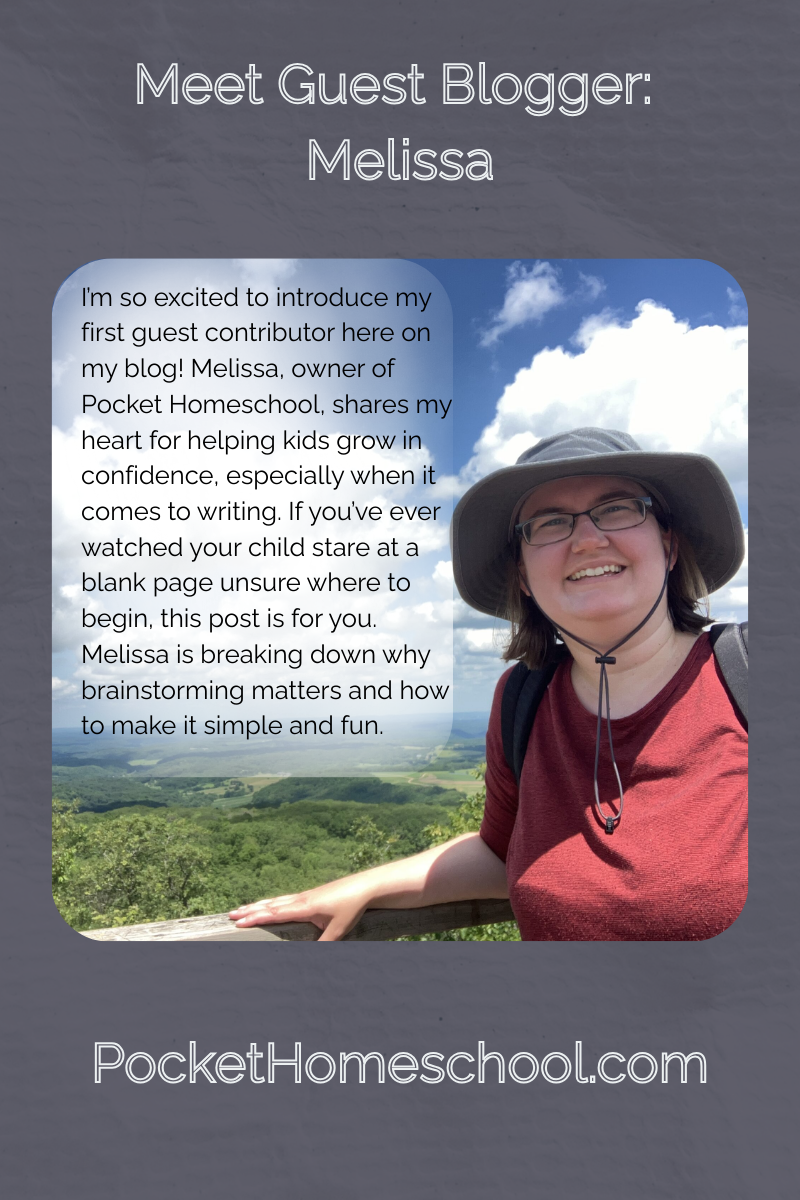
Connect with Melissa: pockethomeschool.com